
Art Classes, Workshops and Events in Frisco, TX
Frisco students make one of the longer drives to our studio, about thirty minutes south to Richardson, and they make it for a simple reason. Frisco has grown so fast that its art teaching is mostly children’s programs and one night events. A Frisco adult who wants a real painting course, small group, working painter as teacher, materials included, finds it at the Art Be You studio. If that is what you are searching for under art classes in Frisco, TX, this page is the map to it.
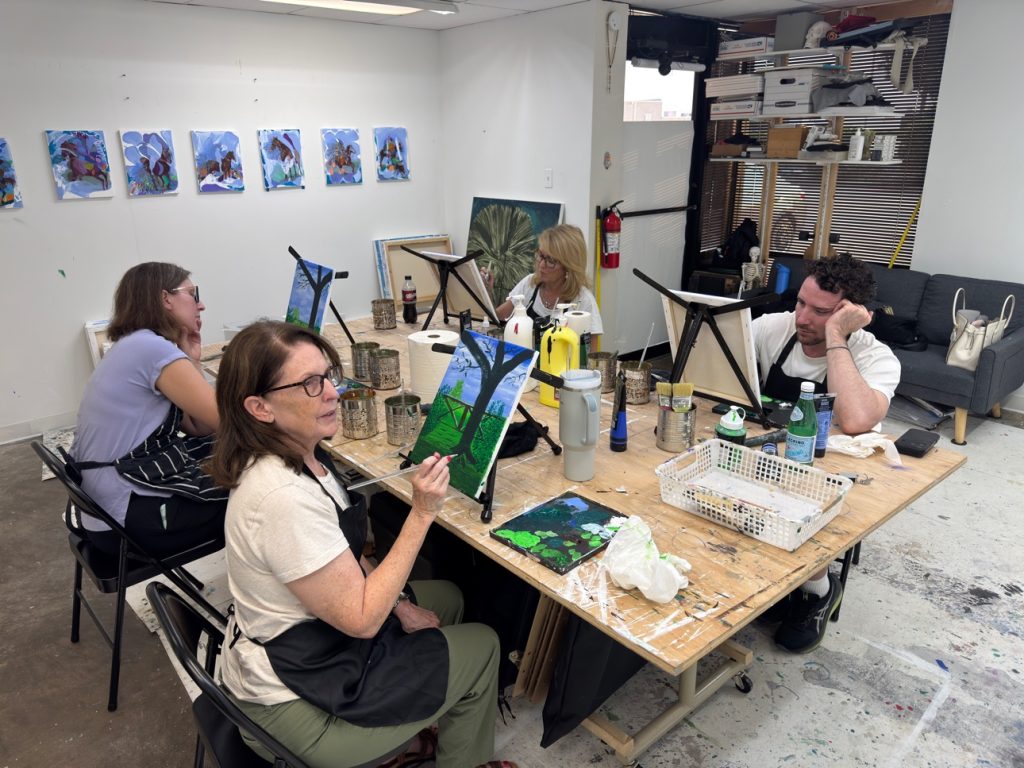
Art Be You is led by Bartosz Beda, a professional painter with an international exhibition record and years of teaching adults, seniors, and children. The studio classes hold four to six students. You arrive with nothing and paint for three hours. Frisco families already know the pattern of driving south for the good version of something. This is the good version of a painting class.
Painting Classes for Frisco Adults
Two courses meet at the studio each week, on Tuesday and Thursday evenings from 6 to 9 PM. Frisco drivers take Preston Road or the Dallas North Tollway to the Sam Rayburn Tollway and US 75, and arrive as the evening traffic thins.
The acrylic painting course meets on Tuesdays. Students paint on canvas and build each picture in stages that fit a weekly rhythm: drawing and underpainting one evening, color the next, finishing work after that. Acrylic forgives and dries fast, which matters when your painting rides home in a car. The teacher demonstrates on his own canvas and then corrects each student’s work individually, painting by painting.
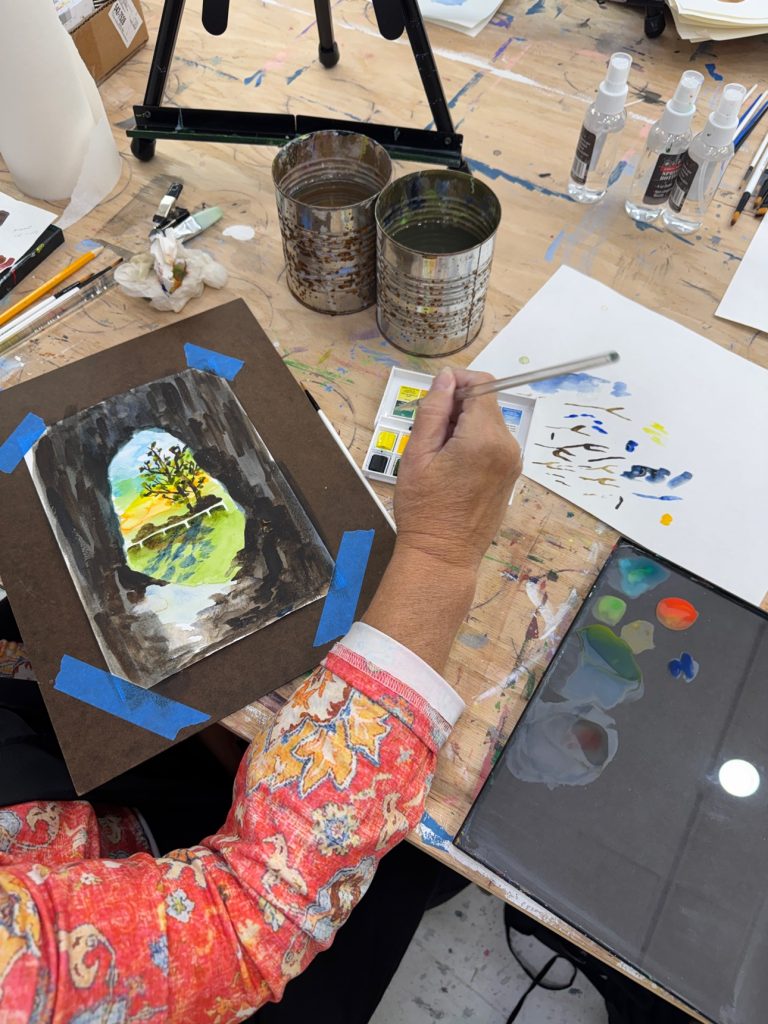
The watercolor painting course meets on Thursdays. Watercolor is the medium of planning and timing, taught here in steps small enough to master: the water in the brush, the tilt of the board, the moment to stop. Frisco’s many engineers, designers, and analytical thinkers often take to it once they see it is a system, not a mystery.
There is no printed syllabus marched through regardless of the room. The work is set from the students present, their level, and what their paintings need. Beginners sit with returning students and learn from both the teacher and the contrast. Sessions run in short blocks through the year, with current dates and open seats on the class pages themselves. The art classes overview compares the courses.
Workshops That Come to You in Frisco
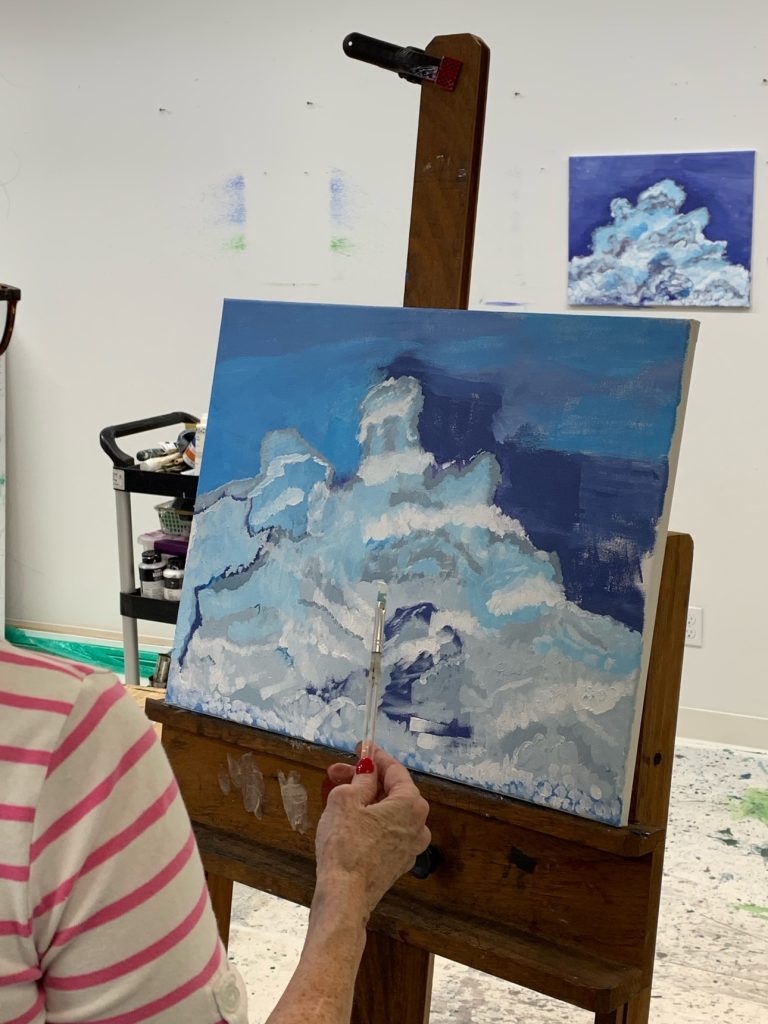
Frisco groups can skip the drive. A workshop runs about ninety minutes in your own room in Frisco. The teacher brings paints, brushes, canvases, table covers, and printed instructions, sets up, teaches, and cleans up. Everyone leaves with a finished painting.
Senior communities are opening across Frisco as the city matures past its young family phase, and their activity directors book painting workshops because residents of every ability can succeed at them. The canvases arrive with the drawing already sketched, so the session is painting, not a drawing test. Memory care groups are welcome, with pacing adjusted to the room.
Corporate teams are Frisco’s other natural booking. The city is stacked with headquarters and campuses, from the Dallas Cowboys at The Star to the offices along the Tollway corridor, and their teams book painting events for holidays, launches, and appreciation days. Up to thirty people paint together for ninety minutes. The details are on the art workshops page.
Private groups and schools in Frisco book sessions as well, from parent groups to friends who want a private evening at the studio instead of a restaurant.
Frisco and the Arts
Frisco is a new city building its culture in public, which makes it an interesting place to learn painting. You can watch a city invent its art life, and join in while it happens.
Frisco Discovery Center and the Frisco Art Gallery. On Cotton Gin Road, the Discovery Center is the city’s arts building: a gallery showing local and regional artists, a black box theatre, and, in the same complex, the National Videogame Museum and the TrainTopia model railroad exhibit. The gallery’s exhibitions rotate through the year and are free to visit during the center’s open hours. For a painting student, it is the home gallery, the first place to see how regional artists present finished work.
Frisco Heritage Center. At 6455 Page Street, east of City Hall, the city’s free history park holds the Heritage Museum and a village of preserved buildings: a 1904 church, early houses, a log cabin, a one room schoolhouse, a blacksmith shop, and a 1910 steam locomotive with its caboose. It is open Tuesday to Saturday, 10 AM to 5 PM, and admission is free. Painters come for the buildings and stay for the photographs inside the museum, which show Frisco when it was 300 people and a cotton platform.
Museum of the American Railroad. One of the finest railroad collections in the country, moved from Dallas’s Fair Park to Frisco, beside the Discovery Center, with dozens of historic locomotives and cars, including an engine from the Frisco line itself. Visits run on scheduled tours, which should be booked ahead. A student who paints machinery, scale, and industrial form will not find a better subject yard in Texas.
Public art on the trails and streets. Frisco planned art into its growth. The bronze longhorn herd in Central Park, installed in 2003, marks the old Shawnee Trail cattle route that predates the city. Sculptures stand in parks and along the trail system across town, and the city’s newer districts keep adding work. A student with a phone can build a painting reference library without leaving Frisco.
Frisco Public Library. The city’s new library, opened in 2023, is a cultural building in its own right, with exhibitions, author talks, and programs through the year. For residents, its calendar is the easiest way to keep art and learning in the month between classes.
What Frisco Students Paint
Frisco’s subjects are the record of a boomtown, and its students paint the contrast: new stone and glass against the few old structures that survived.
The Rail District on Main Street, where the 1902 townsite stood, gives the historic subjects: brick storefronts, the old water tower skyline, trains still running through downtown on the same line that named the city. Painting a working railroad town that became a suburb is painting Frisco’s whole story in one view.
The longhorn bronzes in Central Park are the city’s signature sculpture group, cattle frozen mid-drive along the Shawnee Trail route. Students draw them for the anatomy and paint them for the bronze light, green brown metal against Texas grass.
The Heritage Center buildings, the church, the schoolhouse, the blacksmith shop, offer the architectural studies, white wood and shadow, that watercolor handles best. Several students have produced a small series from that one free park.
The trail system and the new lakes in Frisco’s subdivisions supply the landscape work: limestone creeks, stocked ponds, and the enormous sky that the flat blackland prairie provides free of charge.
Frisco students tend to be documentarians without knowing it. They paint their young city as it is now, and in twenty years those paintings will be the historical record. Art Be You just gives them the skills to make the record good.
A Short History of Frisco
Frisco began as a cattle trail crossing. In the 1840s the Shawnee Trail, one of the great cattle routes from Texas to the northern markets, passed through this stretch of blackland prairie, and settlers farmed around it. The community that became Frisco first gathered at a settlement called Lebanon, a few miles away.
The city exists because of a railroad and a naming dispute. In 1902 the St. Louis, San Francisco and Texas Railway, which everyone called the Frisco line, built through the area and laid out a townsite on Francis Emerson’s farm. Residents moved from Lebanon to the tracks. The town was first called Emerson, but the postal service rejected the name as a duplicate. The residents answered with Frisco City, honoring the railroad, and Washington shortened it to Frisco, effective July 1, 1902. The town incorporated in 1908 with a few hundred people.
For seventy years Frisco stayed what the railroad made it: a cotton and grain town of under 2,000 people, shipping from its platform and living quietly. The change came in the 1990s, when metroplex growth reached the Sam Rayburn corridor and Stonebriar and the Tollway turned Frisco into the next building field. The population went from about 6,000 in 1990 to more than 200,000 by 2020, and roughly 230,000 today, making Frisco one of the fastest growing big cities in America for two straight decades. Sports and headquarters followed: the Roughriders’ ballpark, FC Dallas’s stadium, the Cowboys’ headquarters at The Star.
That history explains the Frisco student completely. This is a city of people who moved for schools, space, and work, many in the last ten years, building a hometown as they go. Its culture is being assembled right now, in buildings like the Discovery Center and in evenings like a painting class. Our Frisco students are, almost without exception, people constructing the life they moved here for, and a weekly class is part of the construction.
Getting to the Studio from Frisco
From most Frisco neighborhoods the studio is about thirty minutes. The usual routes are Preston Road south to the George Bush Turnpike or Campbell Road, or the Dallas North Tollway south to the Sam Rayburn Tollway and across to US 75. East Frisco students often come straight down US 75 from the McKinney side. Classes begin at 6 PM, and Frisco students plan the drive the way they plan everything, once, and then it is routine.
Parking at the studio is free, in a surface lot by the door. Paintings ride home flat in the back seat. DART does not serve Frisco, so the car is the method, and our students treat the half hour as the decompression between the workday and the easel.
Questions Frisco Students Ask
Is the drive worth it for a class?
Frisco students renew at the same rate as our Richardson students, which is the honest measure. The class is three hours, the group is four to six, and the teaching is individual. Judge it after one session.
Which course fits a total beginner?
Usually acrylic. It corrects easily, dries for the drive home, and produces finished work early, which keeps motivation alive. Watercolor is the right second course, or the right first one if you already know you love planning and delicacy.
Do you hold workshops in Frisco itself?
Yes. Senior communities, companies, and private groups in Frisco book single workshops, and everything travels with the teacher. See the art workshops page.
What do I need to buy before starting?
Nothing. All materials are included at the studio. If you later paint at home, the teacher will give you a short list of what is worth owning and what is marketing.
Can I buy a session as a gift for a Frisco friend or parent?
Yes. A gift art class covers a full session, and the person receiving it chooses the course and the session dates.
Start Painting, Frisco
Frisco built everything else in twenty years: the schools, the stadiums, the headquarters. The culture is the part still under construction, and a painting class is a practical way to help build it, starting with your own walls. Choose the acrylic painting course on Tuesdays or the watercolor painting course on Thursdays, and check the current session on the class page.
All the cities we serve are on the Where We Teach page, and student work appears on Instagram and Facebook as it finishes.