
Art Classes, Workshops and Events in Farmers Branch, TX
Farmers Branch is one of the oldest communities in Dallas County, older than Dallas itself, and it sits about twenty minutes southwest of our Richardson studio. The drive up the Dallas North Tollway and across the George Bush Turnpike is an easy one at class time. What waits at the end of it is the Art Be You studio course: four to six students, three hours an evening, all materials included, and teaching by a working painter who corrects every canvas personally. Farmers Branch keeps its history better than any city in the county. Its own art instruction at that level is thinner, which is why its residents look east. If you are searching for art classes in Farmers Branch, TX, this page is the connection.
Art Be You is led by Bartosz Beda, a professional painter with an international exhibition record and years of teaching adults, seniors, and children. His classes are small because the teaching is individual, and individual teaching is what turns attendance into progress. Farmers Branch students tend to be deliberate people. They like a class that is run the same way.
Painting Classes for Farmers Branch Adults
Two courses meet each week at the studio, on Tuesday and Thursday evenings from 6 to 9 PM. The routes from Farmers Branch are the Tollway north to TX 190 east, or Belt Line and Arapaho east through Addison. Both run about twenty minutes in the evening.
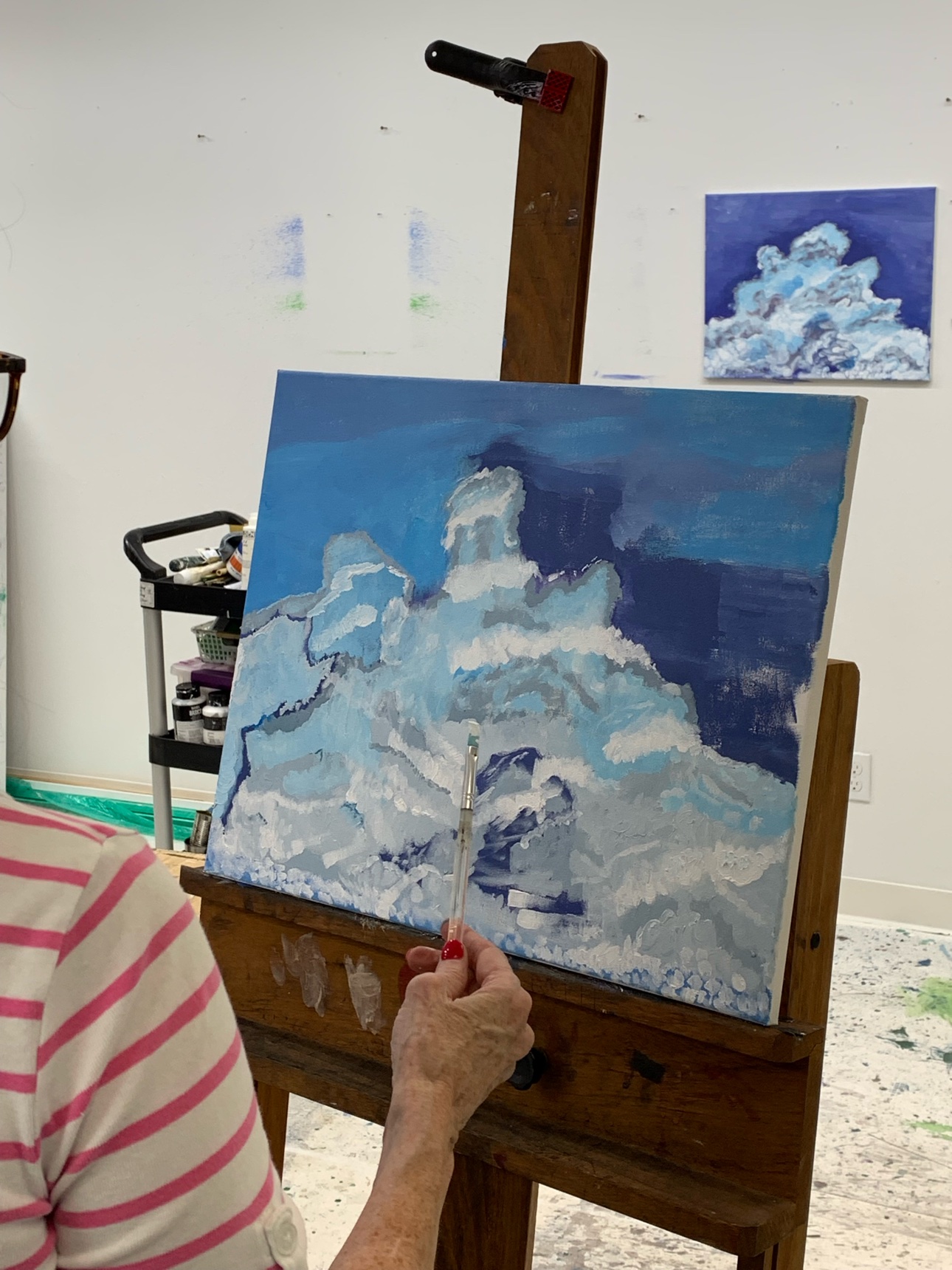
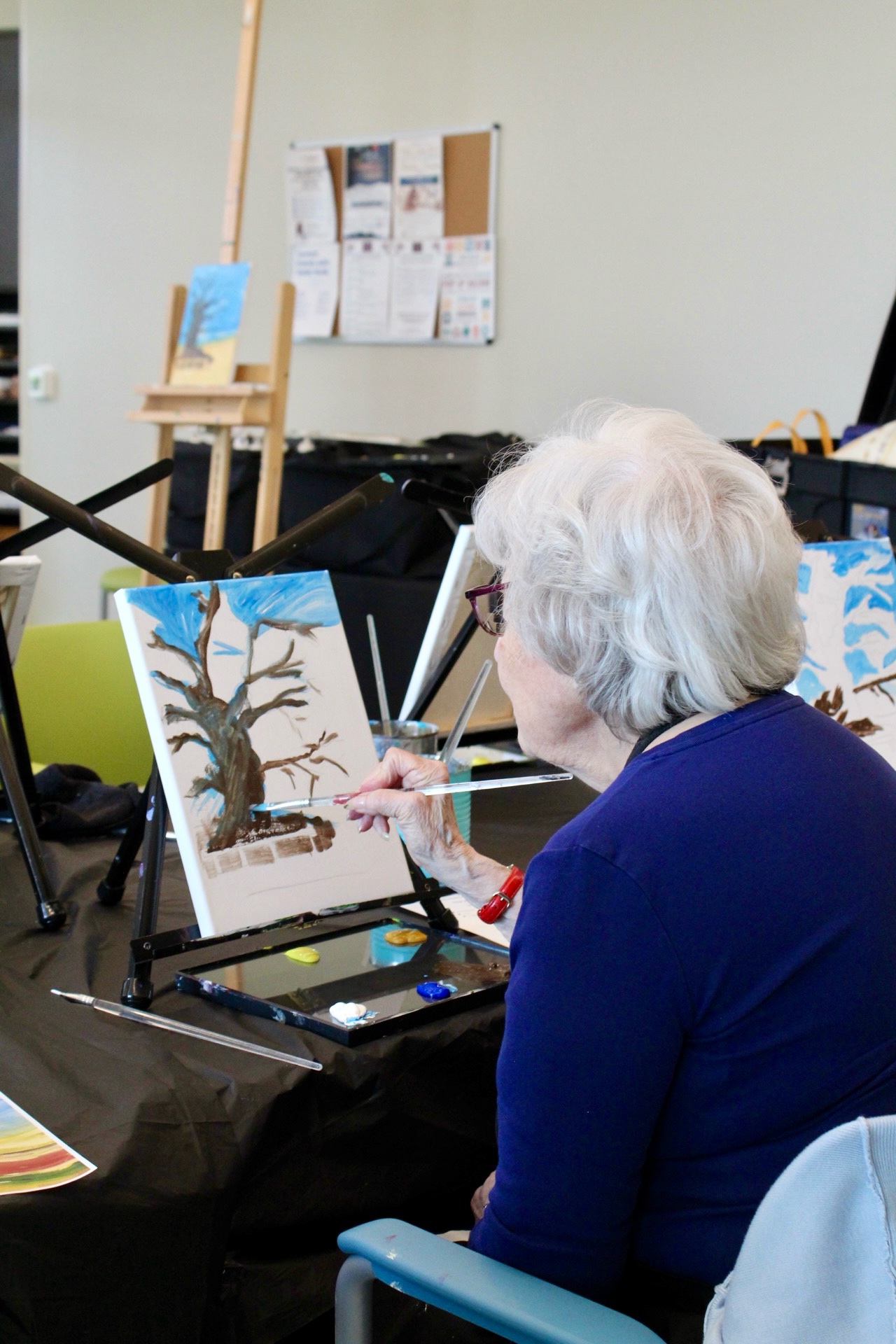
The acrylic painting course meets on Tuesdays. A painting is built in order: drawing and composition first, a tonal underpainting, color in stages, and finishing work last. The teacher demonstrates each step on his own canvas at the front of the room, then makes the rounds, correcting each student’s work on that student’s own terms. Acrylic is the right medium for a weekly rhythm. It dries fast enough to layer within an evening and to ride home safely afterward.
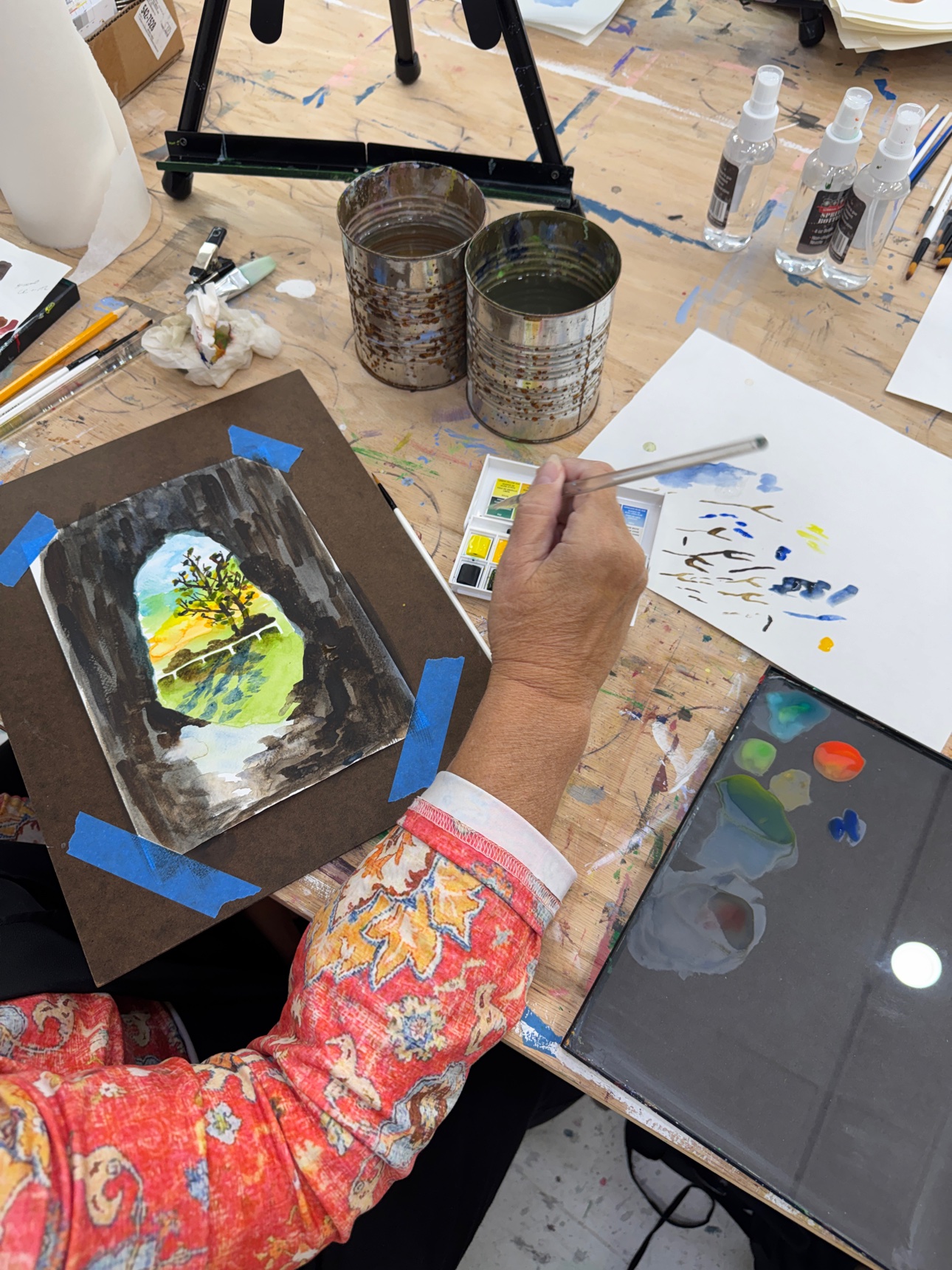
The watercolor painting course meets on Thursdays. Watercolor is taught as preparation and timing: the wetness of the sheet, the load of the brush, the order of the washes. Students start with exercises in control and reach finished paintings within a session, with the teacher settling each plan before the first wash is laid.
No course here follows a printed syllabus against the room’s will. The teaching follows the paintings present. A new student from the neighborhoods near the Historical Park and a returning student from Brookhaven’s side of town will work on different problems in the same three hours, and both will leave with homework in their heads. Sessions run in short blocks through the year. Current dates and open seats are on the class pages, and the art classes overview compares the two courses.
Workshops That Come to You in Farmers Branch
Groups in Farmers Branch can have the session at home instead. A workshop runs about ninety minutes in your own room. The teacher brings paints, brushes, canvases, table covers, and printed instructions, sets up before the start, teaches, and cleans up when the painting is done. Every participant finishes a picture.
Senior communities are a natural fit in a city that takes its older residents seriously, with its own senior center and long established neighborhoods. Activity directors book painting workshops because residents succeed at them: the canvases arrive with the drawing already sketched, the teaching goes step by step, and memory care groups are paced gently. It is programming that produces something a resident can hang in her own room that same day.
Corporate teams along the Tollway and LBJ corridors book workshops for team days and holiday events. Up to thirty people paint together for about ninety minutes, and the host provides only the room. The full offer, including what is needed from you, is on the art workshops page.
Private groups book birthday sessions, garden clubs, church groups, and neighborhood friends, either at the studio or at a Farmers Branch address.
Farmers Branch and the Arts
Farmers Branch calls itself the City in a Park, and its art life grows out of its history and its green space rather than out of a museum building. That suits painters well. The subjects are outdoors and free.
Farmers Branch Historical Park. The city’s treasure: more than twenty acres of Dallas County history, opened in 1986, holding buildings from every era of the settlement. The 1856 Gilbert House is the oldest rock house in Dallas County still standing on its original foundation, listed on the National Register of Historic Places. Around it stand a log homestead area from the 1840s, an 1870s railroad depot with a wooden caboose, an 1890 church, a one room schoolhouse from 1900, a Queen Anne Victorian cottage from 1885, and the 1937 Dodson House, home of the city’s first mayor. The grounds are free and open during the day. For a painter, this single park is an education in Texas architecture and light, and our students are assigned it regularly.
The Firehouse Theatre. Since 2016, the old Fire Station No. 1 on Valley View Lane has been a theatre, renovated into an intimate performance space for one of the region’s most decorated community theatre companies. It is proof of the city’s habit: keep the building, give it a second life in the arts. Students go for the productions and for the lesson that a community the size of Farmers Branch can sustain real theatre when it decides to.
Brookhaven College. Dallas College’s Brookhaven campus, in Farmers Branch’s northern half, runs an active arts program with student and faculty exhibitions in its campus galleries during the school year. Its classes and shows give the city a working college art presence, and its grounds, ponds, and sculpture are open to walk.
The rose gardens and parks. The city maintains celebrated rose gardens and a chain of parks and trails along Farmers Branch Creek and Rawhide Creek. A rose garden in bloom is a standing color exercise: dozens of reds and pinks that photographs flatten and only painting sorts out. Students with sketchbooks work the gardens and the creek trails in every season.
What Farmers Branch Students Paint
No other city on this list offers its students a complete 19th century town inside a park, and Farmers Branch students use it the way art students use a museum campus.
The Gilbert House. Rock walls from 1856, deep shade, and Texas limestone in hard light. It is the classic Farmers Branch subject, and teachers have sent students to draw it for decades. Stone teaches value better than almost anything: no color to hide behind, just light and dark telling the truth.
The depot and caboose. Railroad subjects, weathered wood, and iron, painted by students who often had grandparents who shipped from stations like this one. The historical park’s buildings let a student paint the 19th century without leaving the suburbs.
The Queen Anne cottage and the old church. White wood, steep roofs, and strong shadows, the watercolor subjects of the park. Several students have painted the whole park building by building across a season, ending with an accidental exhibition series.
Rose garden studies. When the gardens bloom, classes assign color work from them. A dozen varieties of red roses in one bed is a harder and better lesson in mixing than any tube chart.
Rawhide Creek and the trail system. The green corridors give the landscape work: limestone creek banks, bridges, and winter trees, all inside the city and free to revisit weekly.
Farmers Branch students skew patient. A city that preserved its first mayor’s house and its 1856 rock walls raises people who understand that good things are built slowly and kept. That is also the exact temperament painting rewards.
A Short History of Farmers Branch
The settlement began in 1842, when William Cochran took up land here under the Peters Colony. The area was known early as Mustang, for the mustang grapes along the creek, and then as Farmers Branch, for the branch of the Trinity along which the farms spread. In 1845 the Texan Land and Emigration Company, the Peters Colony’s operator, opened its first office here, and its advertising across the United States and Europe made Farmers Branch the best known town in Dallas County in the 1840s, famous before Dallas was much more than a trading post. Dallas County’s first church, first school, and first blacksmith shop are all credited to this community.
For a century it stayed a farming town, shipping from its depot and growing slowly while Dallas boomed beside it. Its independence was nearly lost after World War II, when Dallas moved to annex it. The residents answered by incorporating: the vote on February 23, 1946 passed 85 to 4, and William F. “Bill” Dodson, who had led the fight, became the first mayor. The first city council met in Dodson’s own home, the house that now stands in the Historical Park.
The postwar decades filled the farms with the neighborhoods, offices, and parks of an inner ring suburb, and the city made two choices that define it now. It invested heavily in green space, earning the name City in a Park, and in 1986 it opened the Historical Park during the Texas Sesquicentennial, preserving the buildings that tell its story. Brookhaven College opened in 1978 on its northern side. The population stands at about 36,000, in a city that has managed the rare trick of suburban growth without amnesia.
Our Farmers Branch students reflect that. Many are longtime residents and history minded, some are Brookhaven students and staff, and all of them arrive with the local instinct that a thing worth doing is worth doing properly and keeping. Painting instruction that is serious, unhurried, and personal fits the city’s temperament exactly.
Getting to the Studio from Farmers Branch
The studio is in Richardson, northeast of Farmers Branch. The fast route is the Dallas North Tollway north to the President George Bush Turnpike (TX 190) east, about twenty minutes at class time. The surface route runs east on Belt Line Road or Arapaho Road through Addison into Richardson. Classes begin at 6 PM, which lets the first rush clear the Tollway before our students need it.
DART’s Green Line serves Farmers Branch station on the west side of the city and connects south through Dallas; reaching Richardson by rail means a downtown transfer to the Red Line, so most students drive. Parking at the studio is free, in a lit surface lot by the door, and finished paintings ride home flat in the back seat.
Questions Farmers Branch Students Ask
Is the class suitable for older beginners?
Yes. Many of our most consistent students started after sixty. The class is four to six students, the teaching is step by step, and nobody is rushed. Senior students from Farmers Branch are a regular part of both courses.
Do I need to bring or buy anything?
Nothing. Paints, brushes, canvases, and paper are all included at the studio. If you later want to paint at home, the teacher will tell you the few supplies worth buying.
Can the Historical Park be used for class painting sessions?
The studio courses meet at the studio, but students are regularly assigned subjects in the park between classes, and the class reviews the results together. It is one of the best outdoor classrooms in the county.
Can our senior community or company book one workshop first?
Yes. Single sessions are the standard booking, and many groups begin with one before scheduling more. See the art workshops page for how it works.
Is a class gift appropriate for a parent in Farmers Branch?
It is one of the most common gifts we sell. A gift art class covers a full session, and the person receiving it chooses the course and dates.
Start Painting, Farmers Branch
Your city kept its 1856 rock house, its depot, and its first mayor’s home while everything around it was rebuilt. That is a painter’s instinct: keep what matters, look at it properly. The studio twenty minutes east teaches the skill that goes with it. Choose the acrylic painting course on Tuesdays or the watercolor painting course on Thursdays, and check the current session on the class page.
All the cities we serve are listed on the Where We Teach page, and student work appears on Instagram and Facebook.