
Art Classes, Workshops and Events in University Park, TX
University Park is a city built around a university, and it shows: a place of readers, museum members, and people who take learning seriously at every age. The Art Be You studio in Richardson is about twenty five minutes north, straight up US 75. For that drive, a University Park resident gets a studio painting course of four to six students, taught by a working painter with an international exhibition record, with every material included and every painting corrected individually. SMU’s own programs serve its students and alumni in larger formats. This is the smaller, personal version, and it draws University Park students season after season. If you are looking for art classes in University Park, TX, start here.
Art Be You is led by Bartosz Beda, a painter whose work is exhibited internationally, and who has taught adults, seniors, and children for years. The classes meet on Tuesday and Thursday evenings, three hours each, in a working studio where the teaching follows the student’s painting rather than a printed syllabus.
Painting Classes for University Park Adults
Two courses meet each week, on Tuesday and Thursday evenings from 6 to 9 PM. The drive is Central Expressway north from Mockingbird or Lovers Lane to Richardson, against the worst of the evening flow and usually under half an hour door to door.
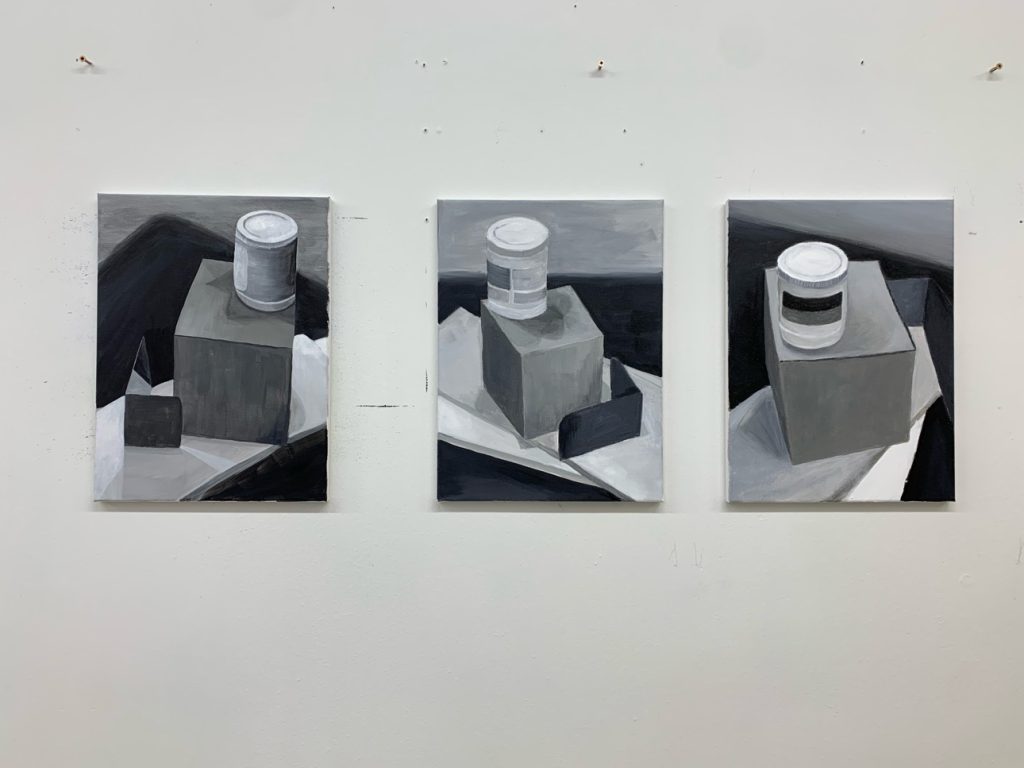
The acrylic painting course meets on Tuesdays. Students build each painting in professional order: drawing and composition, a tonal underpainting, color in planned stages, and finishing passes. The teacher demonstrates on his own canvas before the class, then works the room easel by easel, giving each student the correction their picture needs that night. Acrylic rewards this structure. It layers quickly, corrects cleanly, and dries in time to ride home.
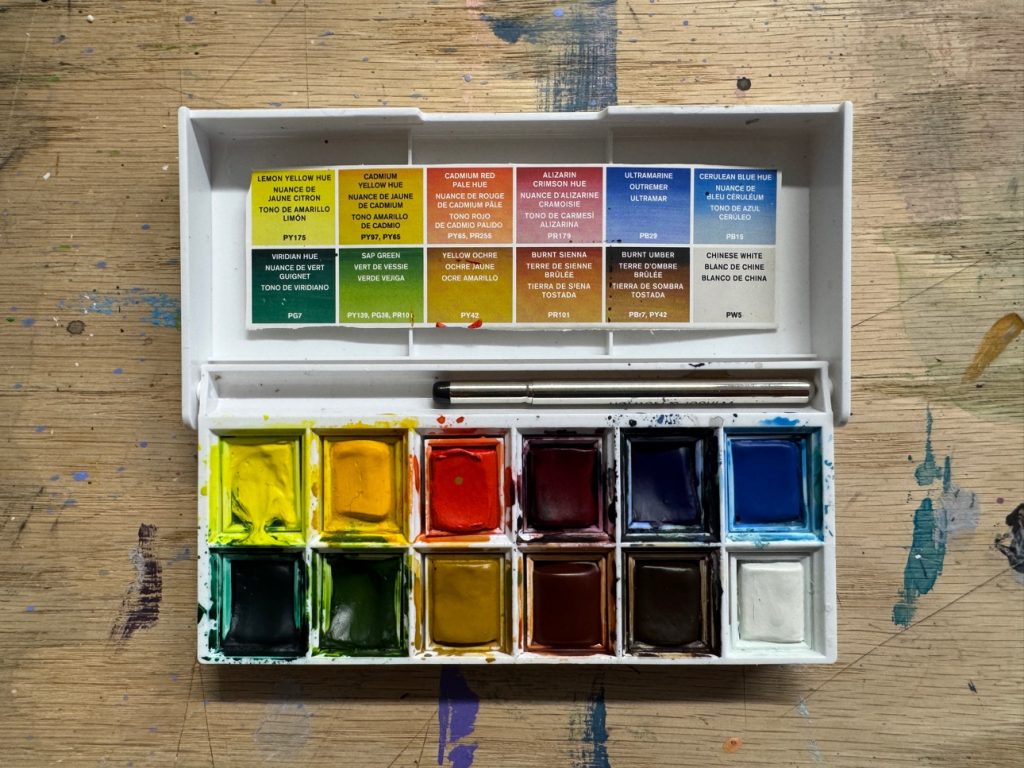
The watercolor painting course meets on Thursdays. Watercolor is taught as a discipline of preparation: how the paper is wetted, how much pigment the brush holds, which passages are reserved as white and which are painted. Students begin with controlled studies and complete full paintings across a session, with the teacher approving each approach before the first wash.
University Park students often arrive with museum habits, and the class uses them. Looking slowly is the core skill, and people who have spent years in the Meadows Museum’s galleries already have half of it. The other half, making the thing yourself, is what the studio teaches. Sessions run in short blocks through the year. Current dates and open seats are on the class pages, and both courses are compared on the art classes overview.
Workshops That Come to You in University Park
For University Park groups, the session can be held locally instead. A workshop runs about ninety minutes in your room. The teacher brings paints, brushes, canvases, table covers, and printed instructions, sets up in advance, teaches the session, and cleans up afterward. Everyone leaves with a finished painting.
Senior communities and private clubs in and around University Park book painting workshops as member and resident programming. Residents paint from canvases that arrive with the drawing already sketched, so the session is painting and conversation, not a drawing examination, and the pace adapts to the room, including memory care groups.
Private groups are the other University Park pattern: book clubs that paint, neighborhood friends, birthday sessions, and mothers and daughters booking a shared evening at the studio instead of another dinner out.
Corporate and university adjacent groups along the Central corridor book team sessions of up to thirty for about ninety minutes, with everything supplied. The full arrangement is described on the art workshops page.
University Park and the Arts
University Park holds what may be the strongest single art asset of any Dallas suburb: a great small museum, free, sitting in the middle of the city.
Meadows Museum. On the SMU campus, the Meadows Museum holds the largest and most comprehensive collection of Spanish art outside Spain, founded in 1965 on the collection of Algur H. Meadows and housed since 2001 in its own building on Bishop Boulevard. Velazquez, Goya, Miro, and Picasso hang in quiet, well lit galleries, and admission policies keep it within everyone’s reach. For a painting student, this is the finest classroom in Texas: stand in front of Goya’s etchings and Sorolla’s light, then drive north and try to do it yourself. Our students are sent there with sketchbooks and specific looking assignments.
Southern Methodist University and the Meadows School of the Arts. SMU, chartered in 1911 and opened in 1915, gives the city its name and its cultural center of gravity. The Meadows School of the Arts stages exhibitions, including shows in its Pollock Gallery, alongside concerts, theatre, and lectures through the year. The campus itself, with Dallas Hall’s Georgian dome modeled on the University of Virginia’s Rotunda, is the city’s defining architecture and a standing drawing subject.
George W. Bush Presidential Center. On the campus’s east side, the Bush Center, opened in 2013, combines a museum, library, and gardens of Texas native plants. Its exhibitions rotate, and its grounds extend the campus’s walkable cultural core. Students paint the native garden plantings in spring, an easy five minutes from anywhere in University Park.
Snider Plaza. The city’s 1920s shopping village, opened in 1927, is University Park’s living room: small storefronts, cafes, and mature trees on a human scale. It has the street life painters need, figures, awnings, window light, and it rewards the student who draws in public with a coffee at hand.
The parks along Turtle Creek and the city parks system. Caruth Park, Curtis Park, and the creek corridors give the city its green subjects: ponds, bridges, and some of the oldest shade trees in Dallas County. Painters work them in every season.
What University Park Students Paint
University Park students have a museum of Spanish masters in their own city, and it shapes what they choose to paint: ambitious subjects, approached seriously.
The SMU campus. Dallas Hall above the main quad, columned and symmetrical, is the formal architecture exercise. Students draw it for perspective and paint it for the warm brick against blue Texas sky. The campus’s live oaks supply the tree studies that test every beginner.
Sorolla light, attempted at home. After the Meadows Museum, students come back wanting Mediterranean light: white walls, hard sun, colored shadow. The class channels that into still life and garden subjects painted in high key, the most joyful exercises we teach.
Turtle Creek and the park ponds. Reflections, bridges, and herons within the city limits. Watercolor students in particular work the creek, because still green water under old trees is a complete education in mixing greens, the hardest family in the box.
Snider Plaza street scenes. Figures at cafe tables, shop windows, evening light. Students who fear drawing people start here, small and fast, and discover that a plaza at dusk forgives everything.
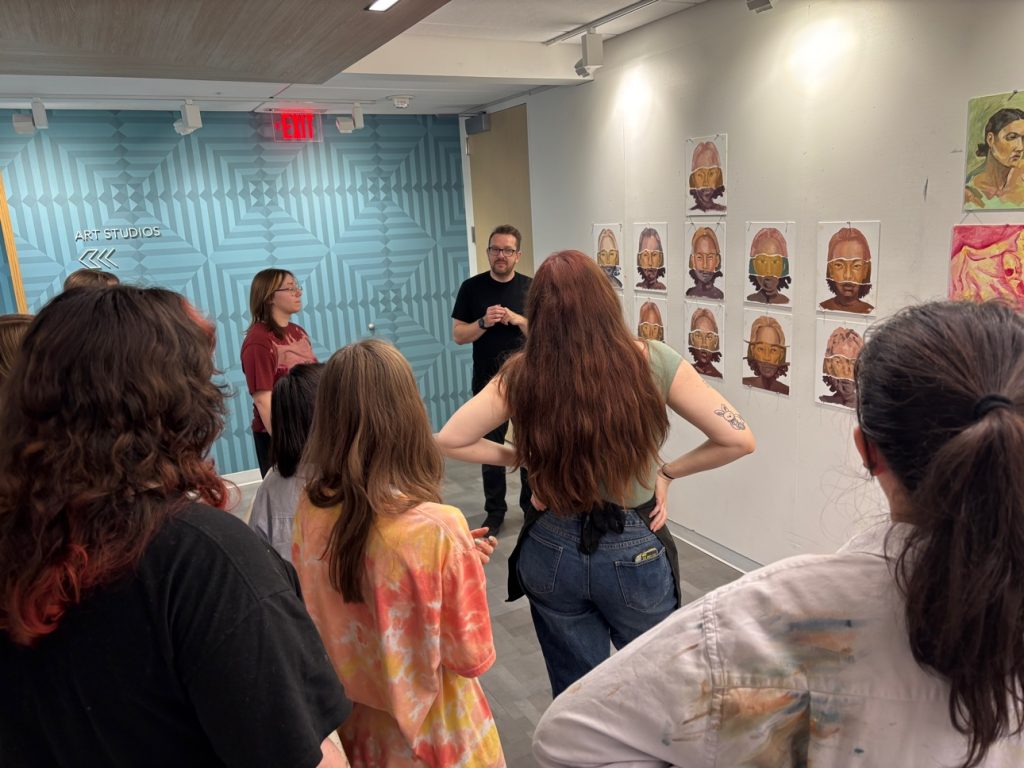
University Park students skew educated and exacting, and the class meets them there: demonstrations are explained properly, criticism is specific, and progress is measured painting to painting. It is a room where “good enough” is not said often, which is exactly why its students improve visibly within a single session.
A Short History of University Park
University Park exists because a university came first. Southern Methodist University was chartered in 1911, Dallas having won the competition to host it, and opened its doors in 1915 with Dallas Hall rising over empty prairie north of the city. Houses followed the campus. The community that grew around the school took the name University Park, and in 1924 it incorporated as its own city, keeping its independence inside a growing Dallas, which now surrounds it on all sides.
The city filled in through the 1920s and 1930s with the homes, churches, and shopping that its residents still use: Snider Plaza opened in 1927, the Park Cities’ Baptist and Methodist churches rose along its avenues, and the streets were planted with the oaks that shade them today. Algur Meadows’s gift of his Spanish collection to SMU in the 1960s gave the small city an art museum of international rank, and the Bush Presidential Center, opened in 2013, added a second national institution. The population stands at about 25,000.
University Park today is one half of the Park Cities, with Highland Park, and it functions as Dallas’s inner neighborhood of schools, churches, and campus life. Its students in our studio reflect the place: alumni, faculty families, professionals from the corridor, and a strong share of retirees who treat learning as a permanent condition. A class of four to six, taught properly, with a museum habit behind it, suits University Park exactly.
Getting to the Studio from University Park
The studio is in Richardson, straight north on US 75 (Central Expressway). From Mockingbird Lane or Lovers Lane entrances, the drive runs about twenty five minutes in the early evening, and parking at the studio is free, in a surface lot at the door. Classes begin at 6 PM, and most University Park students find the expressway run becomes part of the ritual: decompression up, painting, decompression down.
DART’s Red Line serves Mockingbird Station at the city’s edge and runs north to Richardson’s Arapaho Center and Galatyn Park stations, a workable option for students who prefer the train. Paintings ride home in the train without trouble if they are dry, and acrylics painted early in the evening usually are.
Questions University Park Students Ask
How is this different from SMU’s continuing education art classes?
Those are good programs, typically larger and term based. The studio course is four to six students with one teacher for three hours, working on your own paintings with individual correction. Many students have done both and use them differently.
I am a complete beginner among experienced painters. Will I fit in?
Yes. Beginners are the normal starting point, and the mixed room helps them: you learn from the teacher’s corrections of advanced paintings as much as from your own. Everyone in the room began with a first canvas.
Can our book club or neighborhood group book a private session?
Yes, at the studio or at your location. Private groups are a regular part of the schedule. Send the group size and preferred dates through the art workshops page.
Do you offer one on one teaching?
Private lessons at the studio are available by arrangement for students with a specific goal, such as building a portfolio or preparing work for exhibition. Contact us through the class pages to discuss it.
Can I give a session as a gift?
Yes. A gift art class covers a full session, and the person receiving it chooses the course and the session dates.
Start Painting, University Park
You live in the one Dallas suburb with a world class art museum inside it. The step from looking at paintings to making them is twenty five minutes up Central Expressway. Choose the acrylic painting course on Tuesdays or the watercolor painting course on Thursdays, and check the current session on the class page.
Every city we serve is listed on the Where We Teach page, and the studio shares finished student work on Instagram and Facebook each week.