
Art Classes, Workshops and Events in Garland, TX
Garland borders Richardson to the southeast, and for Garland residents the Art Be You studio is one of the closest real painting schools there is. Depending on your neighborhood, the drive runs ten to twenty minutes: up Garland Road and into Richardson, or across George Bush Turnpike to the north side. Garland students have painted with us for years, and this page gathers what we offer them.
Art Be You is led by Bartosz Beda, a professional painter with an international exhibition record who teaches adults, seniors, and children. The studio classes are small, four to six students, and every material is included. If you are searching for art classes in Garland, TX and finding mostly paint and sip nights and children’s programs, this is the other thing: a working studio, a working painter, and evening courses for adults who want to actually learn.
Painting Classes for Garland Adults
The studio runs two weekly evening courses, both from 6 to 9 PM. Evening scheduling matters in Garland, a city of working families and long commutes. You can get home, change, and still make class without a fight.
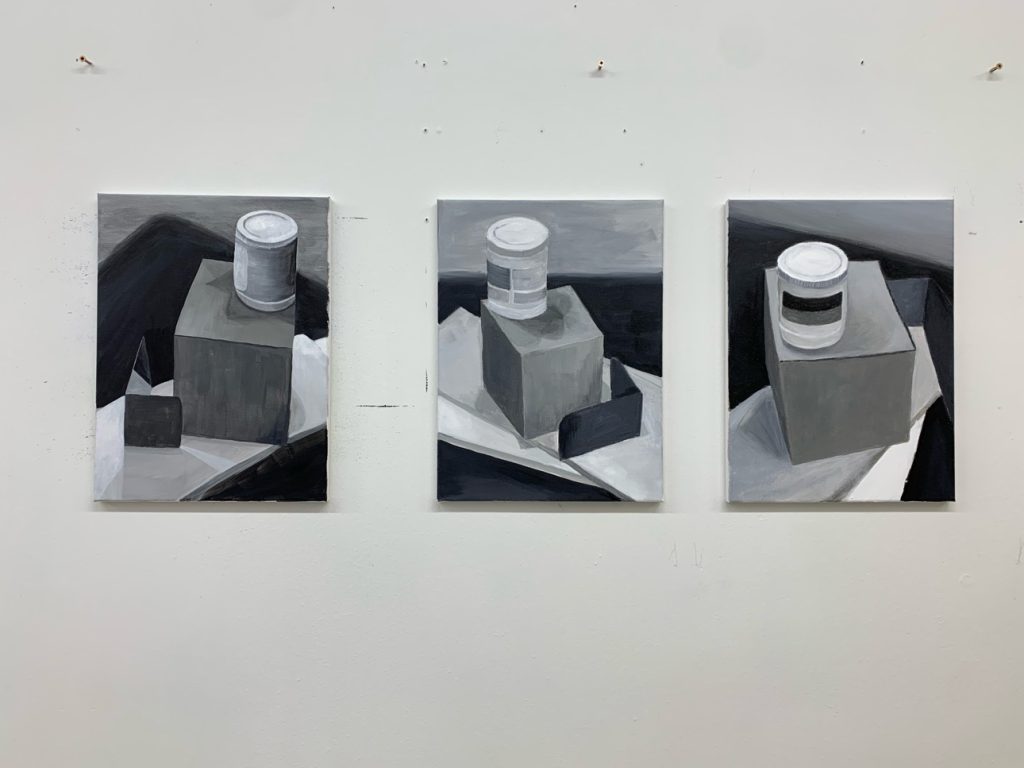
The acrylic painting course meets on Tuesday evenings. Acrylic is the workhorse medium: opaque, fast drying, correctable. Students build paintings on canvas layer by layer, working through still life, landscape, and subjects of their own. The teacher demonstrates each stage on his own canvas, then moves around the room correcting each student’s work individually.
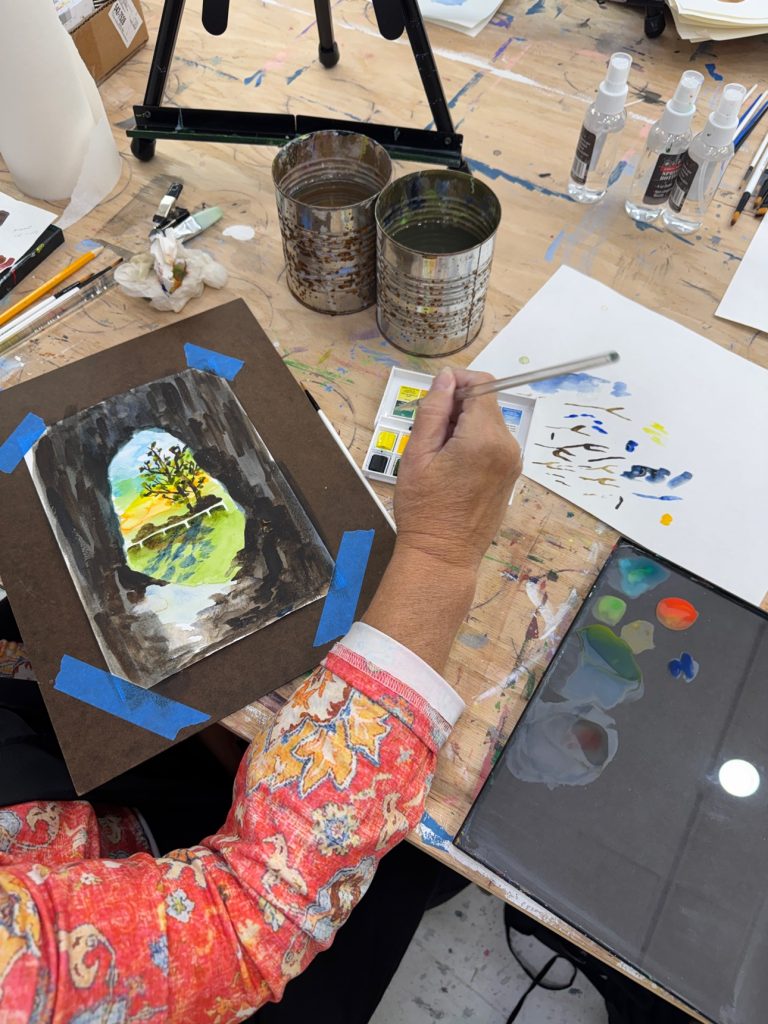
The watercolor painting course meets on Thursday evenings. Watercolor is the lighter, more transparent medium, and it is taught in careful steps, from the amount of water in the brush to the moment a wash must be left alone. Students learn control by painting studies first, then carry the skills into finished pieces.
Neither course runs on a fixed script. The plan for the evening comes from the people in the room, their level, and what their paintings need next. Beginners are welcome in both courses, and most students are. Sessions run in short blocks through the year, with current dates and enrollment on the class pages, not frozen into pages like this one. The art classes overview compares both courses in one place.
Workshops That Come to You in Garland
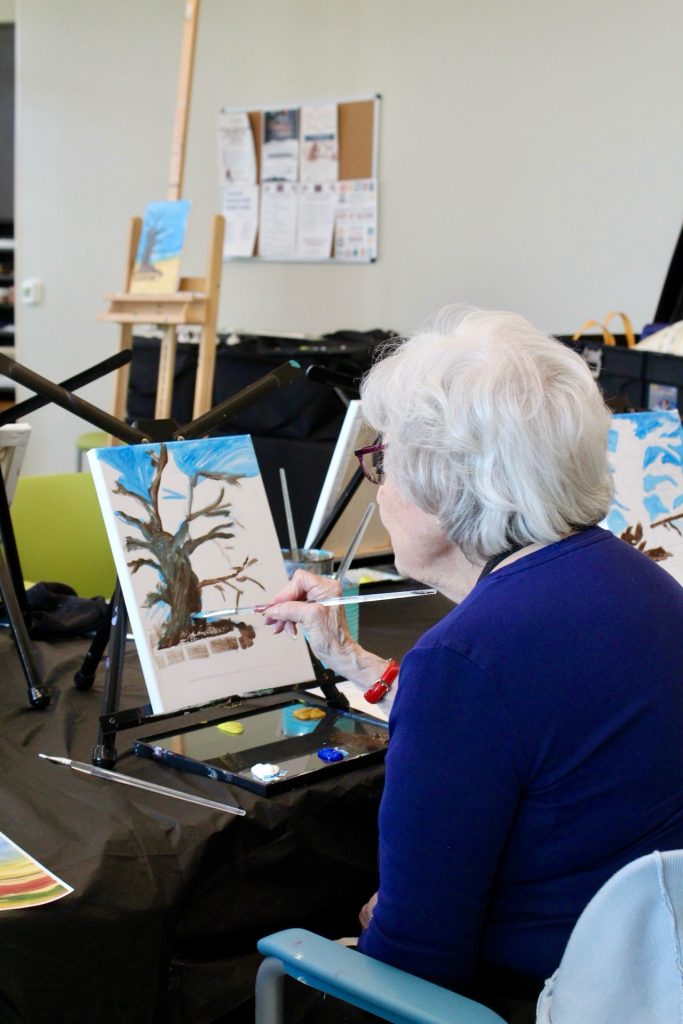
Garland groups can skip the drive entirely. An Art Be You workshop comes to your building in Garland, runs about ninety minutes, and includes paints, brushes, canvases, table covers, printed instructions, setup, and cleanup. Everyone finishes a painting to take home.
Senior communities book the most Garland workshops. The city’s senior living communities and its active adult programs run full activity calendars, and painting is the rare activity that is quiet, social, and produces something to keep. Canvases arrive with the drawing already sketched, so residents of every ability can paint successfully, including memory care residents with a little extra guidance from the teacher.
Corporate and workplace events work in Garland too. The city has a large manufacturing and industrial base along its rail corridors, and office and plant teams book painting events for appreciation days and holidays. A group of up to thirty paints together for ninety minutes. The offer is detailed on the art workshops page.
Churches, libraries, and neighborhood groups in Garland also book one time painting events. If your group has a room and tables, the workshop fits in it.
Garland and the Arts
Downtown Garland has quietly become one of the more complete small arts districts in the metroplex, rebuilt around its historic square. These are the stops we recommend to Garland students.
Granville Arts Center. At 300 North Fifth Street, a block from the square, the Granville is Garland’s home for live performance and visual art. It holds the 720 seat Brownlee Auditorium, a smaller theatre, and the glass walled Atrium, where art exhibitions hang and receptions are held. The box office is open Monday to Friday, 9 AM to 5 PM, and the center hosts concerts, theatre, and community productions through the year. The Atrium exhibitions are free to visit on performance days and give students a close look at regional artists’ work.
Plaza Theatre. Garland’s 1941 movie palace at 521 West State Street, restored to its Art Deco design and reopened as a performance venue with about 350 seats. It shows classic films, concerts, and stage productions, and the building itself, with its restored marquee over the square, is a painting subject on its own.
Garland Landmark Museum. At 393 North Sixth Street, inside the city’s old Santa Fe depot, the Landmark Museum holds Garland’s history: photographs, artifacts, and exhibits about the railroads and the families who built the town. It is open Thursday to Saturday, 10 AM to 2 PM, and entry is free. Students who paint from photographs will find the museum’s old Garland images worth the visit.
Downtown Garland Square. The square itself, recently rebuilt with a pavilion and gathering lawn, hosts markets, festivals, and concerts through the year, including the city’s holiday celebrations. Combined with the Granville, the Plaza, and the museum within two blocks, it makes downtown the natural art walk of the city.
Garland Civic Theatre and local groups. Community theatre at the Granville, the Garland Civic Theatre among them, has produced plays in the city for decades, and Garland’s art organizations hold member shows and sales during the year. A student who wants an audience for finished work can find a first one close to home.
What Garland Students Paint
Garland gives a painter two kinds of subjects: the old downtown it built around the railroads, and the green edges where the city meets the creek bottoms and the lake.
Spring Creek Forest Preserve, in north Garland, is the surprise. It protects a stretch of old forest along Spring Creek, with trails under tall hardwoods that feel far from the suburbs around them. Students photograph its creek bends and winter trees, and the preserve’s bare branches have become a running subject in the watercolor course, where a tree against a pale sky is the classic exercise.
Downtown Garland offers the built subjects: the Plaza Theatre marquee over State Street, the brick storefronts of the square, and the old depot that now holds the Landmark Museum. Painting a marquee is a lesson in lettering, bright color, and evening light, and more than one student has taken it on as a personal project across a whole session.
Lake Ray Hubbard forms Garland’s eastern edge. Its shores, marinas, and wide water give the city its share of Texas sky. Students drive out for photographs at sunset, when the lake does the composition work for them, and bring back the kind of big sky studies that teach a painter how much of a landscape is air.
Back at the studio, these local photographs turn into slow, finished work. A Garland scene painted over three or four evenings teaches more than a copied masterpiece, because the student knows the place and can tell when the painting gets it wrong. That honesty is the whole point of learning to paint where you live.
A Short History of Garland
Garland’s story starts with two rival settlements. Duck Creek and Embree grew up a short distance apart in the 1880s, each with its own post office ambitions and its own railroad stop. The dispute over the post office went all the way to Washington, and in 1891 the federal government settled it by placing one post office between the two towns and naming it for Augustus H. Garland, the Attorney General of the United States. The towns merged around it, and Garland was incorporated the same year.
The railroads made the city. Lines crossing at Garland turned it into a shipping and manufacturing point for the farms of eastern Dallas County, and the downtown square grew up around the depot. Through the twentieth century Garland added industry steadily; by the postwar decades it was a manufacturing city as much as a farming one, with plants and warehouses along the rail corridors and subdivisions filling the land between.
Garland today has about a quarter of a million residents and is one of the most diverse cities in Texas, with large Vietnamese, Hispanic, and other international communities whose restaurants and markets line Walnut Street and Jupiter Road. The downtown that the railroads built is now the city’s cultural front room, restored square, theatre, arts center, and museum all within a short walk. For our purposes, Garland is also simply close: a large city of working people, many of them first or second generation Americans, ten minutes from a painting studio.
Getting to the Studio from Garland
From south Garland and the downtown area, Garland Road and Plano Road lead north into Richardson. From central Garland, Walnut Street and Jupiter Road run to the Richardson line. From north Garland, the President George Bush Turnpike takes you west to the studio side of Richardson in about fifteen minutes. Most Garland students arrive in ten to twenty minutes, and parking at the studio is free.
DART light rail’s Blue Line ends at Downtown Rowlett with stations serving Garland at Forest and Jupiter and Downtown Garland. Trains run toward Dallas rather than Richardson, so rail riders transfer downtown; drivers will find the trip much simpler. We mention it because Garland students ask, and the honest answer is that the car wins for this trip.
Questions Garland Students Ask
How long is the drive from Garland?
Ten to twenty minutes for most neighborhoods. South Garland is the far side; north Garland, up by the turnpike, is the close side.
I have never painted anything. Is that a problem?
It is the normal starting point. Both courses assume beginners and include all materials. The teacher demonstrates every stage before you try it.
What does the class do about dinner and timing?
Class runs 6 to 9 PM. Most students eat before or after. Three hours passes quickly when you are painting, and there is a short break in the middle.
Can my Garland community or workplace book one workshop to try it?
Yes. Single workshops are the standard booking, and many groups book a second after the first. See the art workshops page and tell us your group size and the date you have in mind.
Can I give a class as a gift to someone in Garland?
Yes. A gift art class covers a full session at the studio, and the person you give it to picks the course and the session dates.
Start Painting, Garland
Garland has the square, the theatre, the arts center, and a quarter million people, some of whom have been meaning to learn painting for years. The studio is ten minutes away, the groups are four to six people, and the materials are waiting on the table. Choose the acrylic painting course on Tuesdays or the watercolor painting course on Thursdays, and check the current session on the class page.
The full list of cities is on the Where We Teach page. Follow the studio on Instagram and Facebook to see student paintings as they finish.