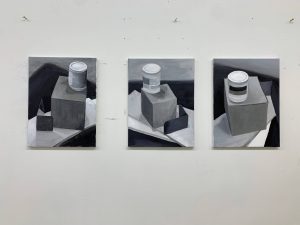
You have been thinking about it for a while. Maybe you walked past the art supply aisle at the craft store and slowed down. Maybe a friend posted a painting online and you thought, I wish I could do that. Then the second thought arrived right on schedule: but I have never made anything in my life.
Here is what almost every beginner needs to hear. You do not need to draw. You do not need talent, a creative childhood, or any experience with paint. What you need is a teacher who remembers what it feels like to be new, a small group of people starting in the same place, and a paint that forgives mistakes. Acrylic forgives more than any other paint.
This guide covers everything a Dallas beginner wants to know: why acrylic is the best first medium, what you will actually learn across three Tuesday evenings, what to bring, how the classes run at our Richardson studio, and whether a studio class or online videos are the better road for you. By the end, the only question left will be which Tuesday you start.
Is acrylic the right medium to start with
Why not oil or watercolor first
If you have never painted, the medium you choose matters more than you think. Oil paint is rich and classic, but it dries slowly, smells like a chemistry lab, and needs special thinners for cleanup. Watercolor is beautiful, but it punishes hesitation: one wrong wash and the paper keeps the evidence forever. Acrylic sits in the sweet spot for beginners. It behaves well, cleans up with water, and lets you fix almost anything.
Mistakes cost nothing
The magic of acrylic is layering. Do not like that cloud? Wait ten minutes and paint right over it. Mixed a muddy color? Cover it with the next layer. This changes the entire psychology of learning. When mistakes cost nothing, you experiment. When you experiment, you learn ten times faster. Beginners in oil often freeze, afraid to ruin the canvas. Beginners in acrylic just keep painting, and the painting keeps getting better.
The practical side
There are practical reasons too. Acrylic dries fast, so you can finish real work in a single evening instead of waiting a week between layers. The colors are bold straight from the tube. There are no fumes, which matters when a room full of people is painting together. And while a full set of beginner supplies costs far less than oils, in our classes you do not buy anything at all.
Why beginners love acrylic:
- Dries in minutes, so you can layer colors and finish work in a single session
- Cleans up with plain water, with no solvents and no strong smells
- Mistakes disappear under the next layer, which makes experimenting safe
- Bold, vibrant color straight from the tube, easy to mix into any shade
- Affordable to buy later, and every material is provided in class anyway
Not a lesser paint
None of this means acrylic is a lesser paint. Professional artists paint museum-quality work in acrylic every day. It only means the medium gets out of your way while you learn the things that actually matter: seeing color, handling a brush, and composing a picture. Those skills transfer to any paint you try later, so starting with acrylic never boxes you in.
What you will learn in three weeks
Our November acrylic session runs three Tuesday evenings, November 3, 10, and 17, from 6 to 9 PM, with Thanksgiving week off. Three weeks sounds short, but three focused weeks with step-by-step guidance cover the entire foundation of painting. Here is how it breaks down.
Week one: getting comfortable
Week one is about getting comfortable. The first evening removes fear on purpose. You will meet the materials, learn how to hold and load a brush, and mix your first colors. Color mixing is the quiet superpower of painting, and it is where most self-taught beginners lose months of progress. A teacher standing next to you, showing you why your green turned brown and how to fix it in ten seconds, is worth more than a year of guessing alone. By the end of night one, you will have made your first small studies and your hands will have paint on them. That is the whole point of week one.
Week two: building a real painting
Week two is about building a real painting. Now we talk about composition, which simply means deciding where things go on the canvas and why. You will learn to work from background to foreground, to block in big shapes before touching details, and to layer paint so your colors stay clean and bright. Everyone starts a larger piece with step-by-step guidance. You are never staring at a blank canvas wondering what to do next, because each stage is demonstrated first and then painted together.
Week three: finishing
Week three is about finishing, which is where paintings come alive and where beginners usually quit at home. You will learn to add the details that matter, adjust the parts that bother you, and answer the hardest question in painting: how do you know when it is done? You will leave with a finished canvas, painted entirely by you, ready to hang on a wall.
Skills you will take home
Skills you will take home:
- Mixing clean, accurate colors from a basic palette
- Brush handling: loading paint, controlling strokes, and softening edges
- Composition: placing elements so a painting feels balanced and intentional
- Layering: building a painting from background to foreground without mud
- Evaluating your own work and knowing when to stop
Notice what is missing from that list: drawing. You do not need to draw to paint in acrylic. We build paintings from simple shapes with guided steps, and the brush does the rest. If you can write your name, your hands already know enough to start.
What to bring and wear
Everything is provided
The short answer: bring yourself. Every material you need is provided in class, including paint, brushes, canvases, palettes, and easels. You do not need to visit an art store, decode a confusing supply list, or spend a dollar before your first class. This is deliberate. Nothing kills a beginner’s momentum like a bewildering shopping trip the week before.
Provided for you in class:
- Professional acrylic paints in a full color range
- Brushes suited to every technique we teach
- Canvases and painting surfaces
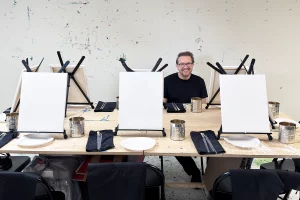
- Palettes, water cups, and easels, set up before you arrive
- Step-by-step instruction and individual help all evening
What to wear
What to wear matters more than what to bring. Acrylic paint washes off skin and rinses out of most things while it is wet, but once it dries on fabric, it is there permanently. Wear clothes you do not mind getting paint on. An old T-shirt and jeans are perfect. If you own a studio apron from some past adventure, bring it. If not, do not worry about it.
Dress code for painters:
- Clothes you will not mourn: an old shirt, jeans, and comfortable shoes
- Tie back long hair, because paint finds loose hair with remarkable accuracy
- Leave the white sweater at home, no matter how good it looks
- Bring reading glasses if you use them; detail work is much easier when you can see it
Leave the expensive supply kit at the store for now. After three weeks, if you want to keep painting at home, your teacher can tell you exactly what to buy and where Dallas beginners get the best value. Until then, travel light and let the studio handle the rest.
How the evening classes run
Small groups, real attention
Classes meet on Tuesday evenings from 6 to 9 PM at 500 E Arapaho Rd in Richardson, about twenty minutes north of downtown Dallas. The groups are intentionally small. In a small group, the instructor actually sees your painting, notices the exact moment you get stuck, and helps before frustration sets in. You are a student with a name, not a seat number in a crowded room.
A loose rhythm, not a fixed schedule
Each evening follows a comfortable rhythm. It starts with settling in at your easel, where your materials are already waiting, and a hello to the group. Then Bartosz Beda, a Dallas-based painter who leads the sessions, demonstrates the next stage of the painting step by step. You will never be asked to do something you have not just watched done. After the demo, everyone paints while Bartosz circulates, helping each person individually. Questions are welcome at any point. Beginners ask the best questions, because they ask about the things experienced painters forgot were ever confusing.
No two evenings run exactly the same way, because no two groups are ever at the same place in their paintings. Some nights lean more toward demonstration, others are mostly painting time with individual guidance. The structure flexes to what the room needs, which is one more thing a fixed video lesson can never do.
The atmosphere
The atmosphere is the part students mention most afterward. It is focused but relaxed. People talk, laugh, and concentrate in turns. Many students come straight from work and find the three hours genuinely restorative, which makes sense: painting asks for just enough attention to push the day’s noise out of your head. Nobody is graded, judged, or put on the spot. The only competition is the painter you were last Tuesday.
Studio classes vs. learning online
Why people start with videos
It is a fair question, because the internet has a painting tutorial for everything and most of them are free. Plenty of people start there, and there is real value in it. Online learning is flexible and cheap. You can pause, rewind, and paint at midnight in your pajamas.
What the videos cannot do
But after watching hundreds of beginners learn, here is the honest comparison. A video cannot look at your painting and tell you why your sky turned muddy. It cannot hand you the right brush when yours is wrong for the job. It cannot notice that you have been avoiding the left side of your canvas for an hour because something there scares you. Beginners do not know what they do not know, so they practice the same mistakes for months without realizing it.
Then there is the supply trap. A ten-minute video casually says you will need twelve things, and suddenly you are deep into a craft store receipt with the wrong paper and dried-out brushes. In a studio class, every material is provided and chosen by someone who teaches with it daily. And then there is the quiet killer of self-teaching: quitting. Nobody notices when you skip a Tuesday video. Your classmates notice when your easel is empty, and that gentle accountability carries an astonishing number of people all the way to week three.
The honest scorecard
The honest scorecard:
- Feedback: instant and personal in a studio; nonexistent from a video
- Supplies: provided and chosen for you in class; confusing and costly to buy alone
- Pace: a structured three-week progression vs. algorithm-driven wandering
- Motivation: classmates and a fixed Tuesday vs. willpower alone at midnight
- Questions: ask anytime in class vs. shouting into a comment section
The good news is that you do not have to choose forever. Many of our students use both: the class for structure, correction, and momentum, and online videos for extra practice between Tuesdays. If you love tutorials, keep them. Just know that three evenings in a real studio will move you further than three months of videos watched alone on the couch.
FAQ
Do I need any experience to join?
None at all. The class is designed for people who have never painted. If you have painted before, you are welcome too, but the pace and instruction assume a complete beginner.
I cannot draw at all. Is that a problem?
No. Painting in acrylic does not require drawing skill. We build paintings from simple shapes with step-by-step guidance, and every technique you learn works whether or not you can sketch.
What if I have never even held a paintbrush?
Then you are exactly who this class is for. Week one starts with the absolute basics: how to hold a brush, how to load paint, and how to make your first marks without fear.
How much does it cost?
The November three-week acrylic session, meeting November 3, 10, and 17, is $225, and that includes every material you will use. There is nothing else to buy.
What if I have to miss one of the three Tuesdays?
Check the session dates at artbeyou.com before enrolling and pick a month that fits your calendar. If something unexpected comes up mid-session, contact us through the site and we will see what can be done.
Are the evening classes for adults?
Yes, the Tuesday evening sessions are designed for adults. If you are asking about classes for a child or teenager, get in touch through artbeyou.com and we will point you in the right direction.
Will I really finish a painting?
That is the goal of the three weeks, and nearly everyone does. You will take home a finished canvas, painted entirely by you.
Do December sessions run?
December sessions may run depending on interest, so check artbeyou.com for the current schedule rather than assuming dates.
I am nervous about being the worst one in the room.
Everyone feels this before the first class, and everyone discovers the same thing within the first hour: nobody is watching your canvas except the teacher, and the teacher has seen a thousand first paintings. You will be too absorbed in your own work to be nervous.
Your first class is closer than you think
Most people wait months or years between thinking “I want to try painting” and actually trying it. The barrier is never talent and rarely time. It is the first step, which feels bigger than it is. Three Tuesday evenings is a small commitment for something you have wanted for a long time, and the hardest part is simply choosing the date.
The November session runs November 3, 10, and 17, from 6 to 9 PM at our Richardson studio, with Thanksgiving week off. The price is $225 with all materials included. If November does not fit your calendar, check artbeyou.com for the current schedule, since December sessions depend on interest.
Your first finished painting is three Tuesdays away. See the current sessions and reserve your easel at artbeyou.com. Bring yourself, wear something you do not mind staining, and leave the rest to us.