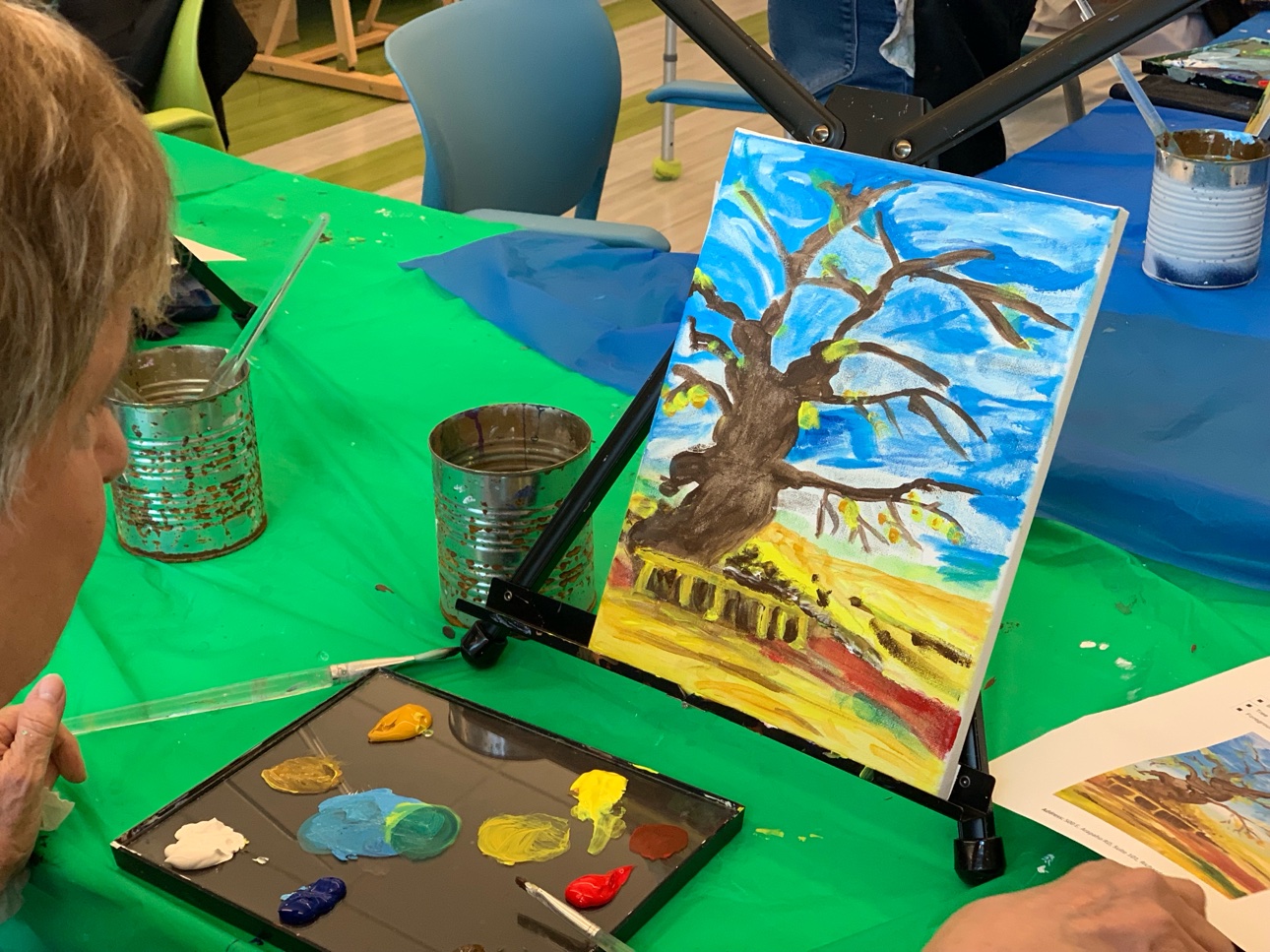
Most people who sit down at one of my workshops have not held a brush in decades. Some painted a little in school. Some have never painted at all. And almost everyone says the same sentence in the first few minutes: “I cannot draw.”
I am writing this for two readers. The first is the senior who has been invited to a painting workshop and is quietly wondering what she agreed to. The second is the son or daughter who wants to know what their parent will actually walk into. This is the experience from the participant’s chair, step by step. If you run activities at a community and you want the booking side instead, I wrote about painting workshops for seniors in Dallas from the organizer’s side. I run these painting workshops at senior communities in the Dallas area, and I run them the same way every time.
Everything is ready before you sit down
I arrive about half an hour before the session starts, and I set up the whole room myself. Table easels. Palettes. Paints. Brushes. Cloth. Aprons. Table covers if the tables need them. By the time you walk in, your place looks like a small painting station that has been waiting for you.
I also bring a demo painting. I made it earlier, specifically for this workshop, and it shows the painting we are going to make together. Every workshop has a different theme, so the demo is never a leftover from some other group. It stands where everyone can see it, and it stays there for the whole session as a reference.
You bring nothing. There is no supply list, no trip to a store, and nothing to remember. That matters more than it sounds. For many people, the worry starts before the painting does, with the fear of showing up unprepared. Here, being unprepared is impossible. You just sit down.
The drawing is already on the canvas
This is the part that changes everything. The canvas waiting at your place already has the image sketched on it. I draw it myself before the session, for every single participant.
Nobody has to struggle to draw the theme. Nobody sits frozen in front of a blank canvas wondering where the first line goes. The drawing, which is the part most beginners fear most, is simply removed from the day.
Most of the people at these workshops are not experienced painters. They are not looking for a hard art lesson. They want to enjoy painting, and they want to start a painting and finish it. The sketch makes that possible. Your energy goes into color, brushwork, and watching an image appear, which is the enjoyable part of painting. The hard structural part has been quietly handled for you.
A printed sheet shows you every step
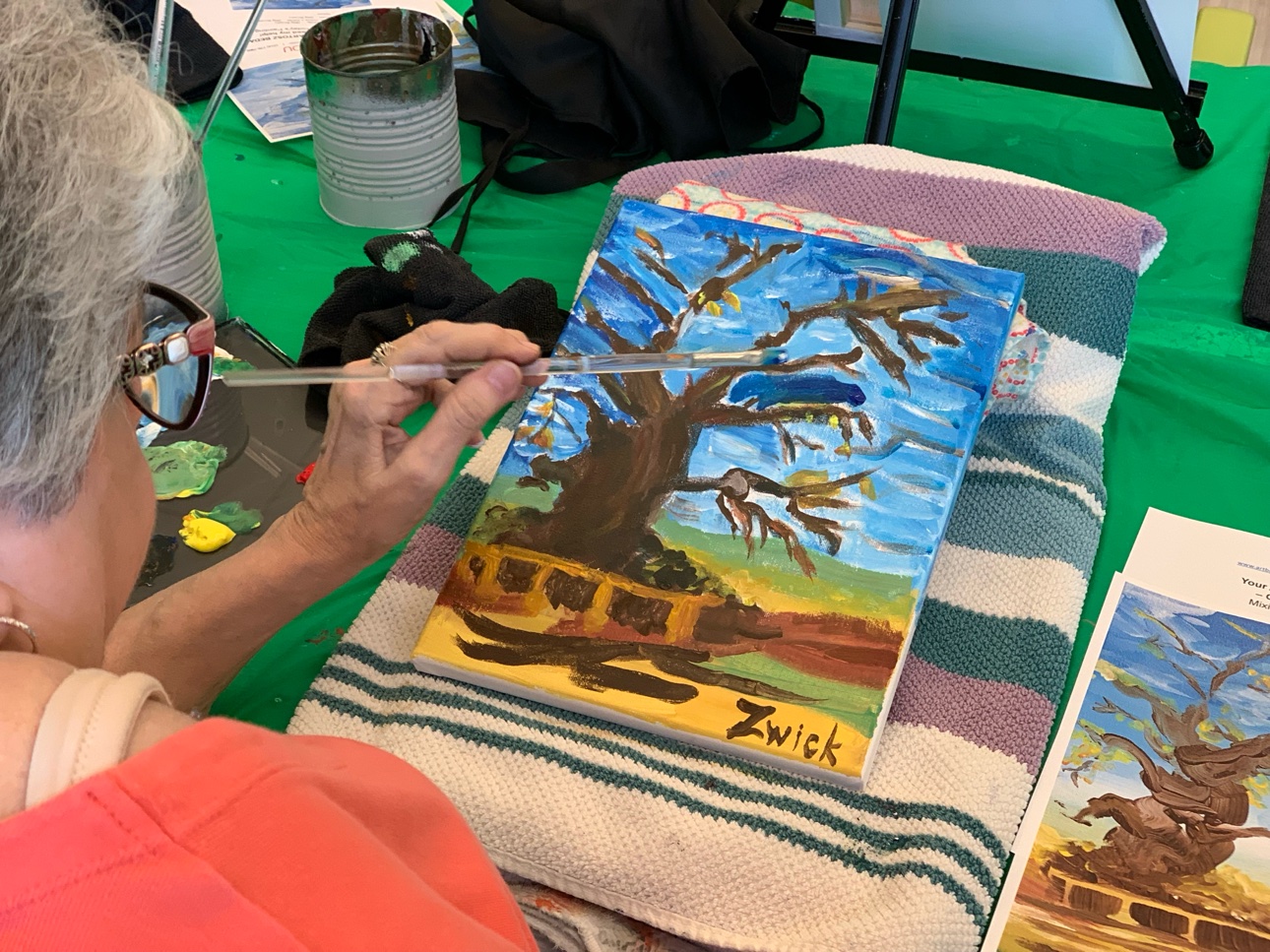
Next to your canvas you will find a printed instruction sheet. It has the image of the painting we are making, and specific instructions: how to start, what brush to use, and what colors go where.
The sheet is there because people work at different speeds. If you work fast, you do not have to wait for me to reach your table before you take the next step. If you work slowly, you can check the sheet and see exactly where you are and what comes next. Nobody gets lost, and nobody has to raise a hand and wait just to keep going.
Think of it as a map. I am walking the room the whole time, but the map means you are never stuck.
The sheet also takes the pressure off your memory. You do not have to hold all the steps in your head after one explanation at the start. The order of the steps, the brushes, and the colors stay printed in front of you for the whole session, and you can look at them as often as you want.
What we paint
The session runs 90 minutes. At the start I briefly explain the paints we use, what to watch out for, and what we are going to paint. Then I present the demo painting to everybody, and we begin.
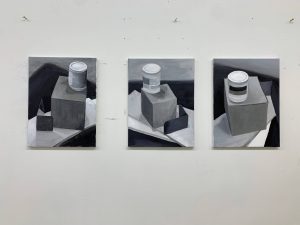
The subjects vary from workshop to workshop. Usually it is a landscape or a still life. Sometimes flowers. Sometimes a city scene, a portrait, or an animal. I draw many of the themes from my own travels. I painted a lot in Italy, landscapes and urban spaces, gates and doors and old streets, and those images often become workshop themes. You can see that side of my work in my own paintings. I keep a wide variety of subjects on hand, because different groups light up at different things.
One honest warning about the paint
We paint with acrylics. At the start of every session I explain the one thing you need to know about them: acrylic paint is permanent. If it gets on your clothes, wash it quickly. Once it dries, it stays.
That is why there are aprons at every place. Paint on your hands washes off with soap and water. Paint on a favorite blouse does not. So we dress for painting, we wear the apron, and after that nobody has to worry. It is a small warning, given once, and then forgotten.
Help walks around the room
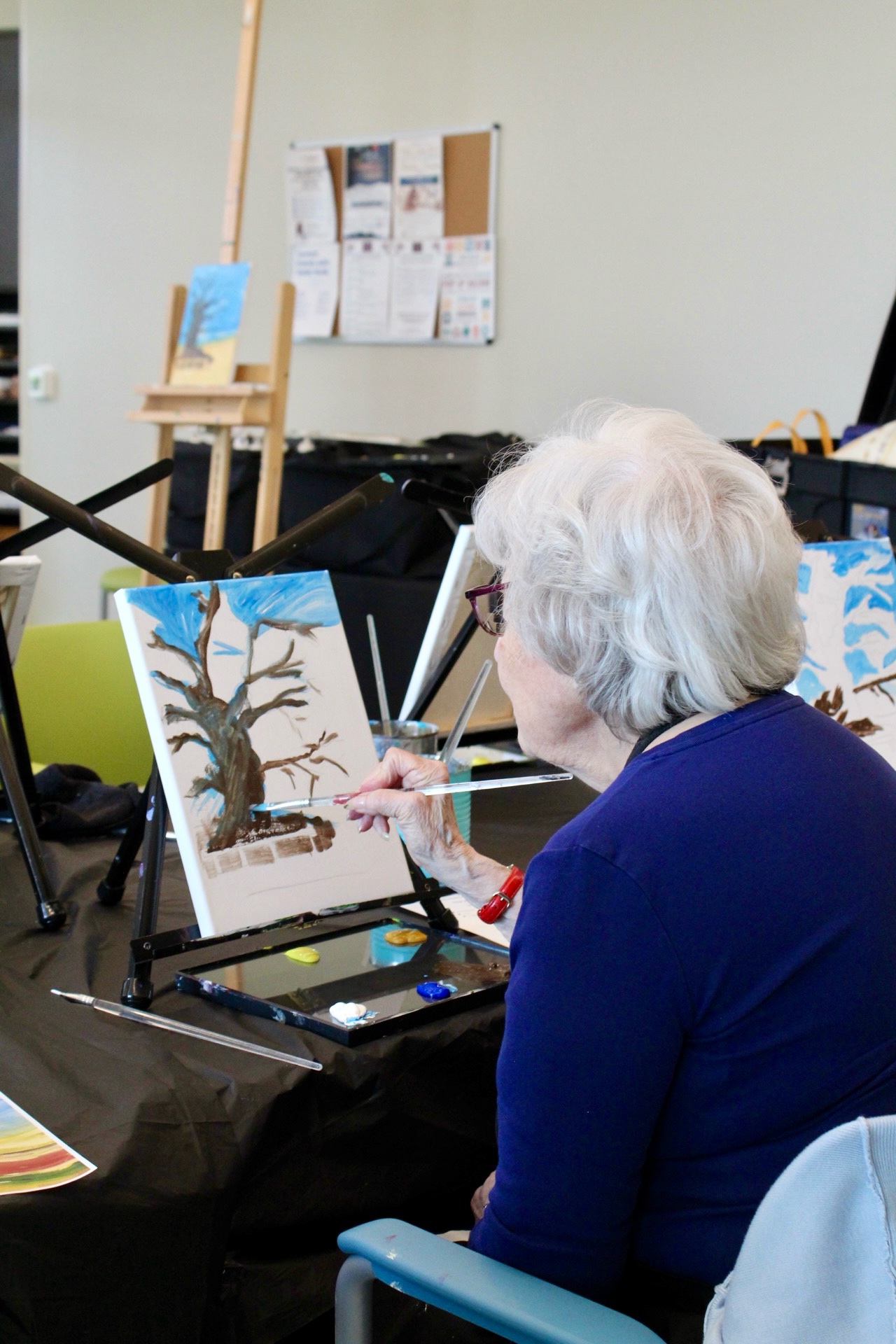
Once everyone is painting, I walk. That is most of my job during the session: moving from table to table, looking at each painting while it can still change.
People need different amounts of help, and that is fine. Some need more attention. Some need less. Some settle in, feel like real artists, and need nothing but a bit of feedback when I pass. Others get stuck at the very beginning, in front of the white canvas, and need me to pick up a brush and make the first marks with them. Painters call that the white canvas barrier, and breaking it is often the whole battle. Once the first color is down, the fear goes, and the painting starts to move.
If you get lost at any point, you are not lost for long. I explain how the paints work, how to move the paint where you want it, and how to get to a result you are pleased with. The communities I visit tell me I am patient with their residents. I take that as the real review of this work. Nobody is rushed, and nobody is left behind.
You leave with a finished painting
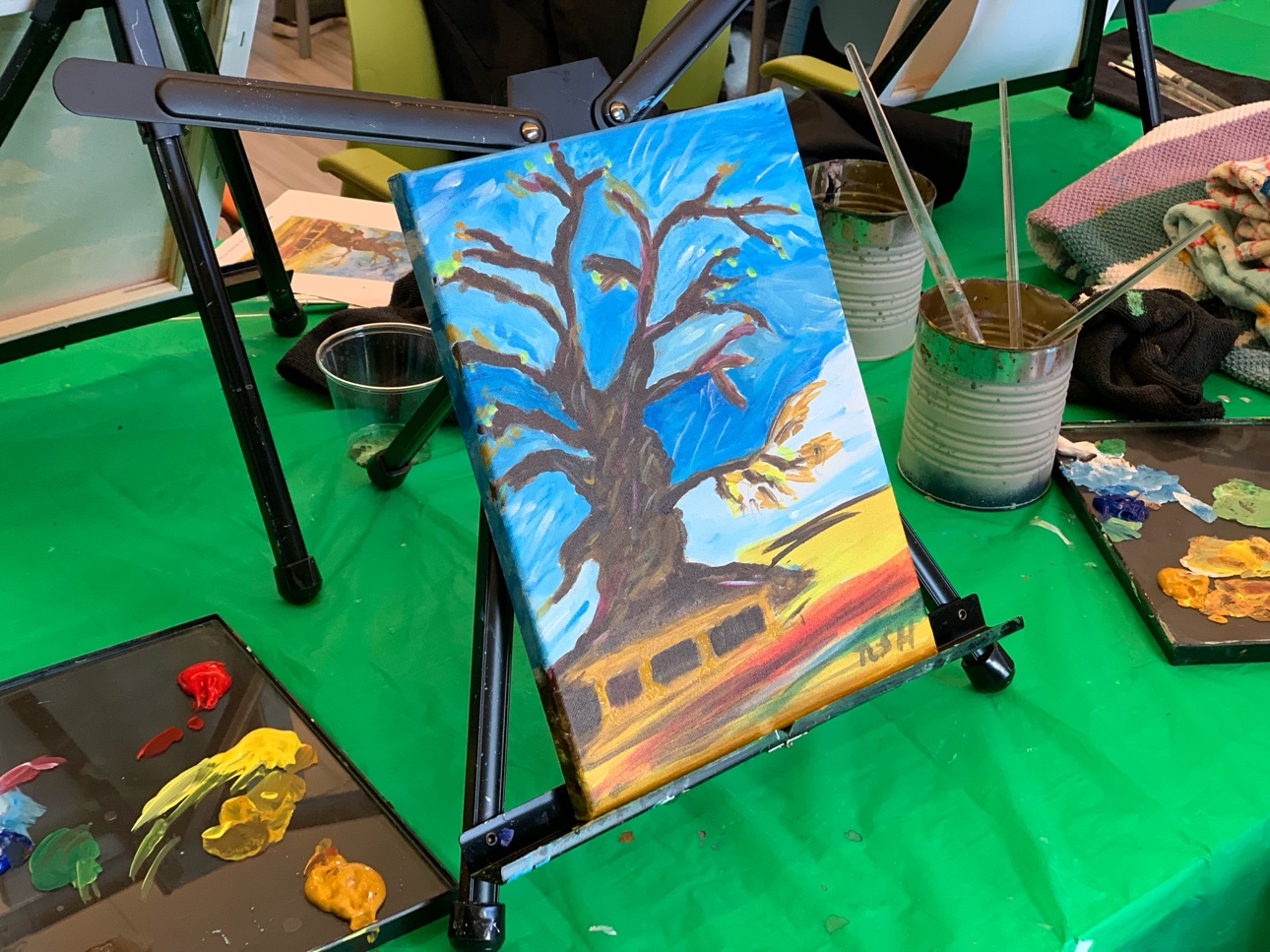
Here is the part I find most satisfying, and I have done this many times now. The seniors come in excited, sometimes a little nervous, and they leave with a finished painting. Not a half finished exercise. A painting, completed in one session, that they made themselves. For many of them, it is the first painting they have made since they were young. For some, it is the first one ever.
They tell me they are happy that everything was brought and set up for them, and that the whole thing was broken down into steps they could follow. That is the design of the workshop. Small steps, help nearby, and a real result at the end.
When the session ends, I clean the palettes, the containers, and the tables. I pack everything and take it back to my studio. The room goes back to being your room. The only thing that stays behind is the paintings.
If you are reading this as a family member
You might be wondering whether your mother will manage, or whether your father will enjoy himself or just feel put on the spot. Based on what I see at these sessions: they manage, because the workshop is built so that they can. The drawing is done. The steps are printed. The materials are in front of them. Help is standing a few steps away.
There is no test at the end and no comparison with anyone else. Everyone paints the same theme at their own pace, and everyone finishes. What most families notice afterward is simpler than skill. Their parent made something, and they are proud of it, and it goes up on a wall.
Two small things before we paint
If you organize activities at a senior community and you want the practical side, times, group sizes, and what I need from you, that is covered in the organizer article I linked at the top. And if you are a family member who paints, or has always meant to, I also teach art classes for adults at my studio. Different setting, same idea: everything provided, help at your easel, and no drawing test at the door.
If you have been invited to one of my workshops, come as you are. Sit down. Pick up the brush. The hard parts have already been taken care of. What is left is the painting, and that part is genuinely enjoyable.
Family members who want to try painting themselves are welcome in my studio classes: the acrylic painting class on Tuesdays and the watercolor painting class on Thursdays. An Art Be You gift card covers a full session. The academy is also on Instagram and Facebook, with photos from classes and workshops.