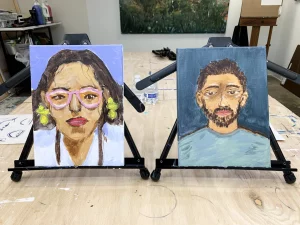
Most adults who walk into my studio have not painted since school. Some have not touched a brush in twenty years. Some in forty. They have jobs. They have families. They have a calendar that is already full and a quiet feeling that something got left behind along the way.
If that sounds familiar, this page is for you.
I teach evening art classes for adults in Richardson, and they were built for exactly that situation. No experience is required. There is no talent test at the door. You do not need to bring anything, know anything, or prove anything. You need one evening a week and a willingness to be new at something again.
The real obstacle is not talent
Adults rarely stay away from painting because they lack ability. They stay away because life filled up first.
Work took the weekdays. Family took much of the rest. Painting started to feel like something you do when you finally have time, and the time never actually came. Years pass that way. Then decades. The wish does not go away, though. It just gets quieter.
There is also an older memory in the way for many people. The last time most adults tried to draw or paint, they were twelve years old. Someone laughed, or a teacher graded it, or it simply did not look like the thing it was supposed to be. That small moment sticks for a long time. Painting as an adult is a completely different experience, but the memory does not know that yet.
“I can’t draw a stick figure”
I hear this sentence more than any other sentence in my studio. People say it like a confession, usually while laughing a little.
Here is the honest answer. It does not matter. Drawing a stick figure is not the skill painting needs. Painting is mostly about looking. It is about mixing a color, putting it down, and seeing what it does next to the color beside it. It is about learning to notice light and shadow. Those are learnable things, and adults learn them faster than they expect.
Adults also bring real advantages into the room:
- Patience, because you already know that skill grows slowly
- Life experience, which gives your work something to say
- Focus, because you chose to be there and nobody made you come
- Honesty about what you do not know yet, which makes teaching easy
Kids learn fast because they are not embarrassed. Adults can learn just as well once they give themselves the same permission.
Starting something new at forty or fifty
Being a beginner as an adult feels different from being a beginner as a child. Children expect to be bad at something first. Adults expect to be competent right away, at everything, including things they have never done. When the first painting wobbles, it stings more than it should.
The fix is plain. Expect the wobble. Everyone’s first paintings wobble, including the first paintings of people who are good at this now. In a room full of adults in the same position, the embarrassment fades quickly. Within a few evenings, nobody is thinking about who is ahead. People are thinking about their own painting, which is exactly where the attention belongs.
What an evening class actually looks like
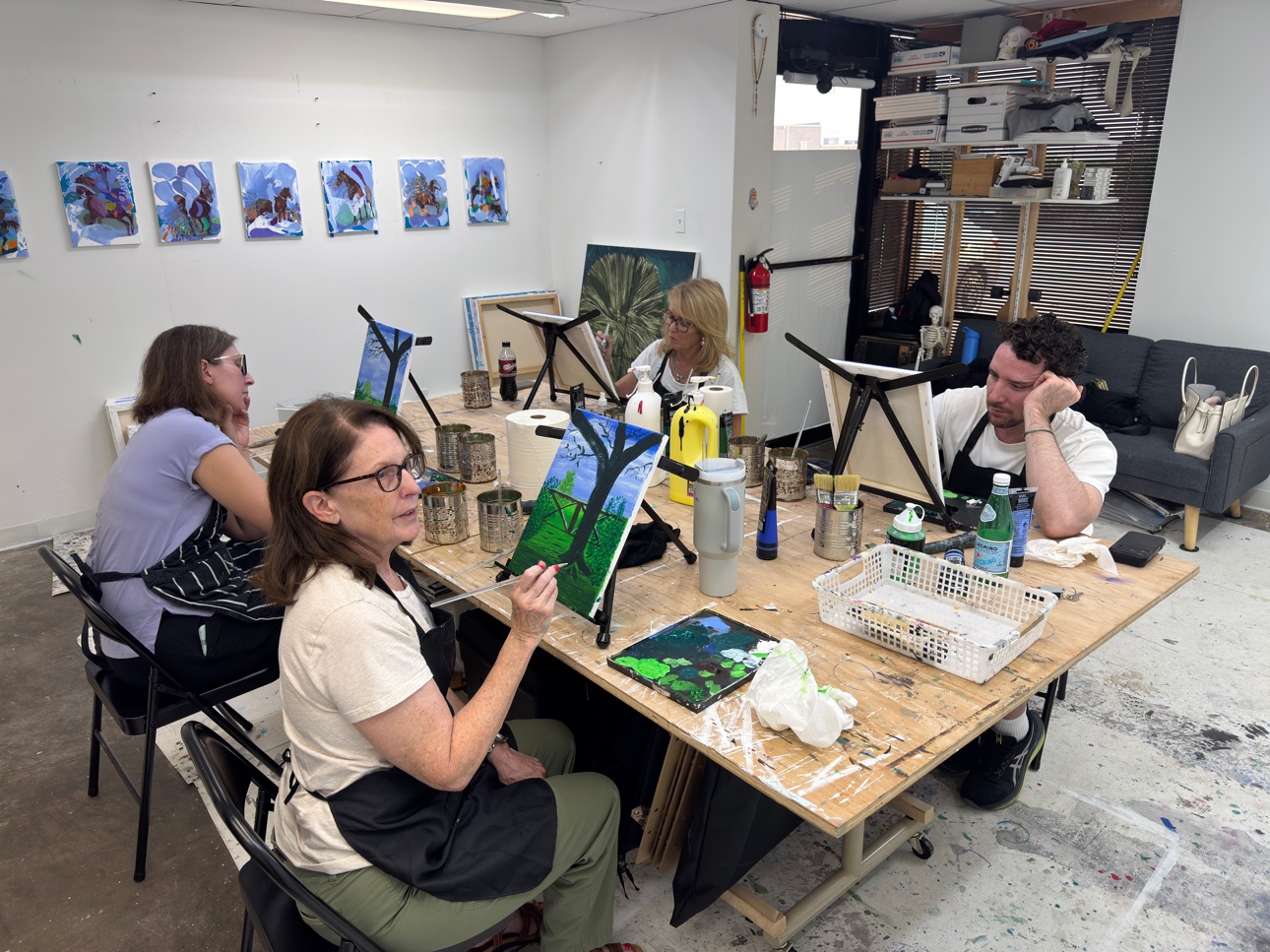
Classes meet from 6 to 9 PM at my Richardson studio. That timing is deliberate. It leaves room to finish work, eat something, and get here without a rush. The class sits after the day, not in competition with it.
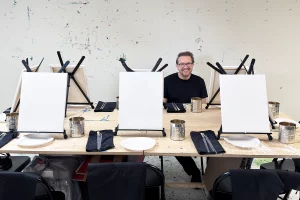
You bring nothing but yourself. Every material is provided: paint, brushes, paper, canvas, water, all of it waiting at your spot. You sit down, and the evening starts.
I teach the class myself. I am a working painter. I exhibit my own paintings nationally, including a solo exhibition in Ohio opening in November 2026, and I teach what I practice in my own studio during the day.
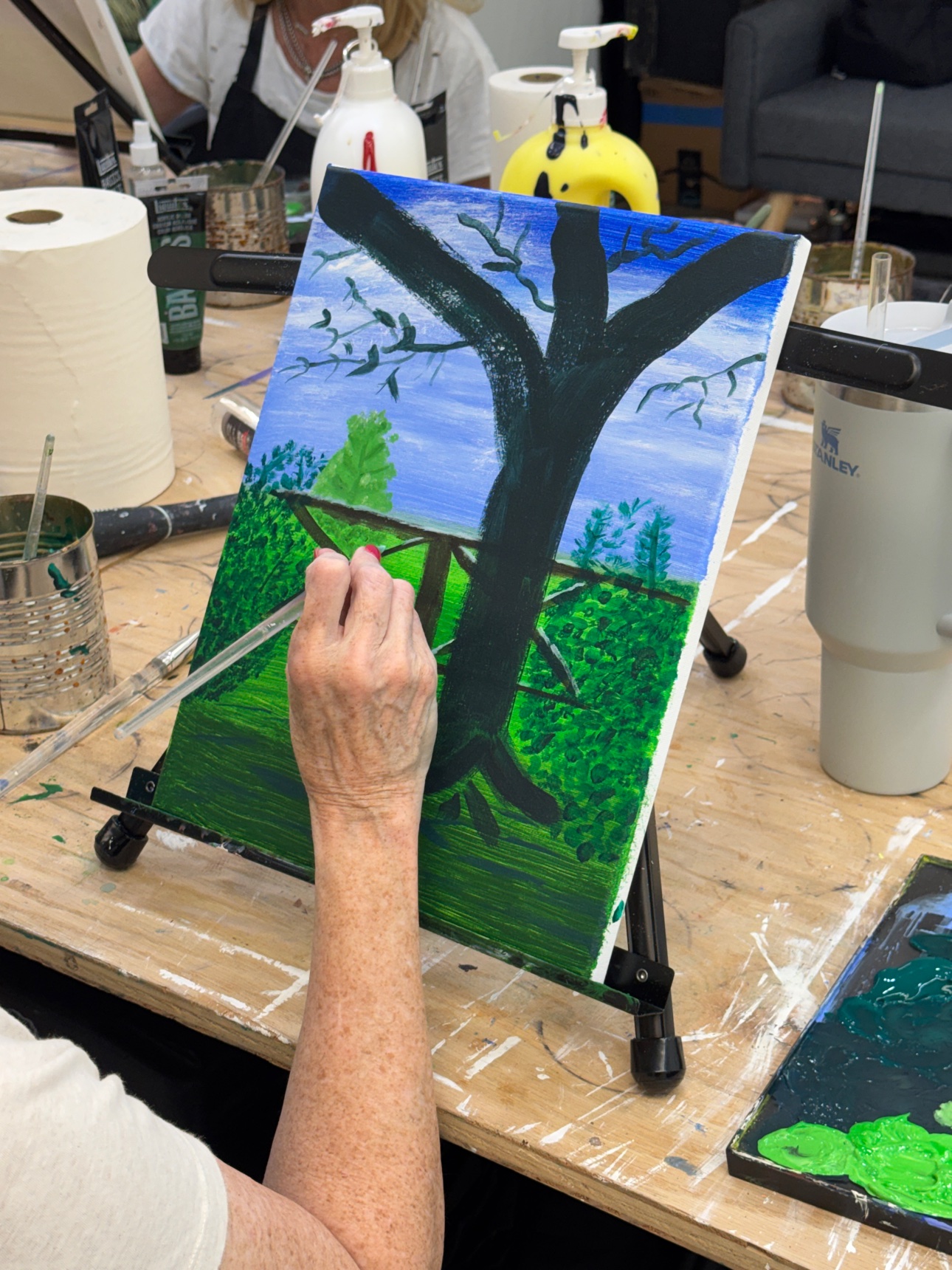
There is no fixed week by week plan pinned to the wall. The pacing follows the people in the room. If the group needs more time on something, we take more time. If everyone is ready to move forward, we move. A real group of adults does not learn on a rigid schedule, and I would rather teach the people in front of me than follow a chart.
Tuesdays are acrylic, Thursdays are watercolor
There are two evenings to choose from:
- Acrylic painting class on Tuesdays, 6 to 9 PM
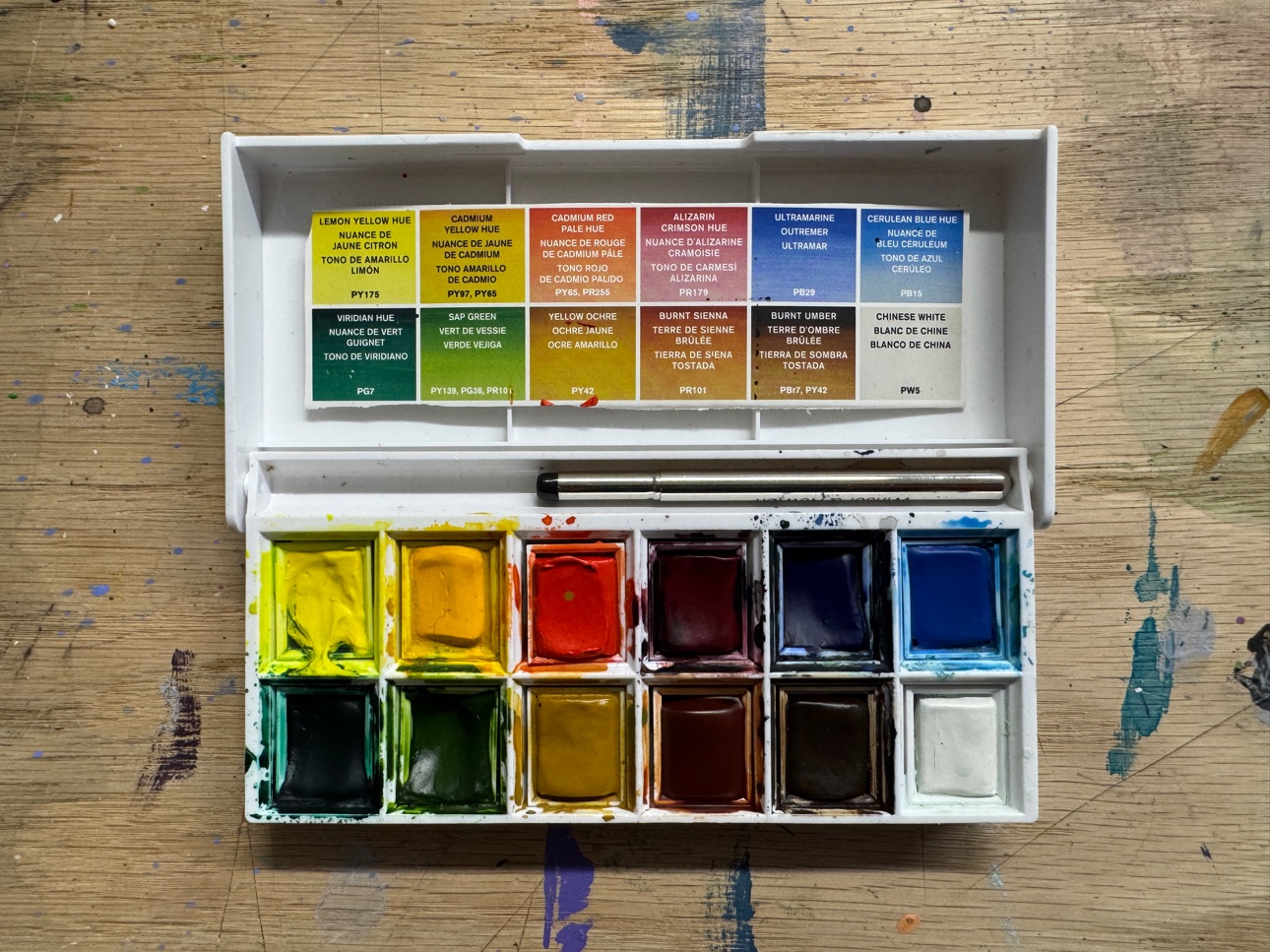
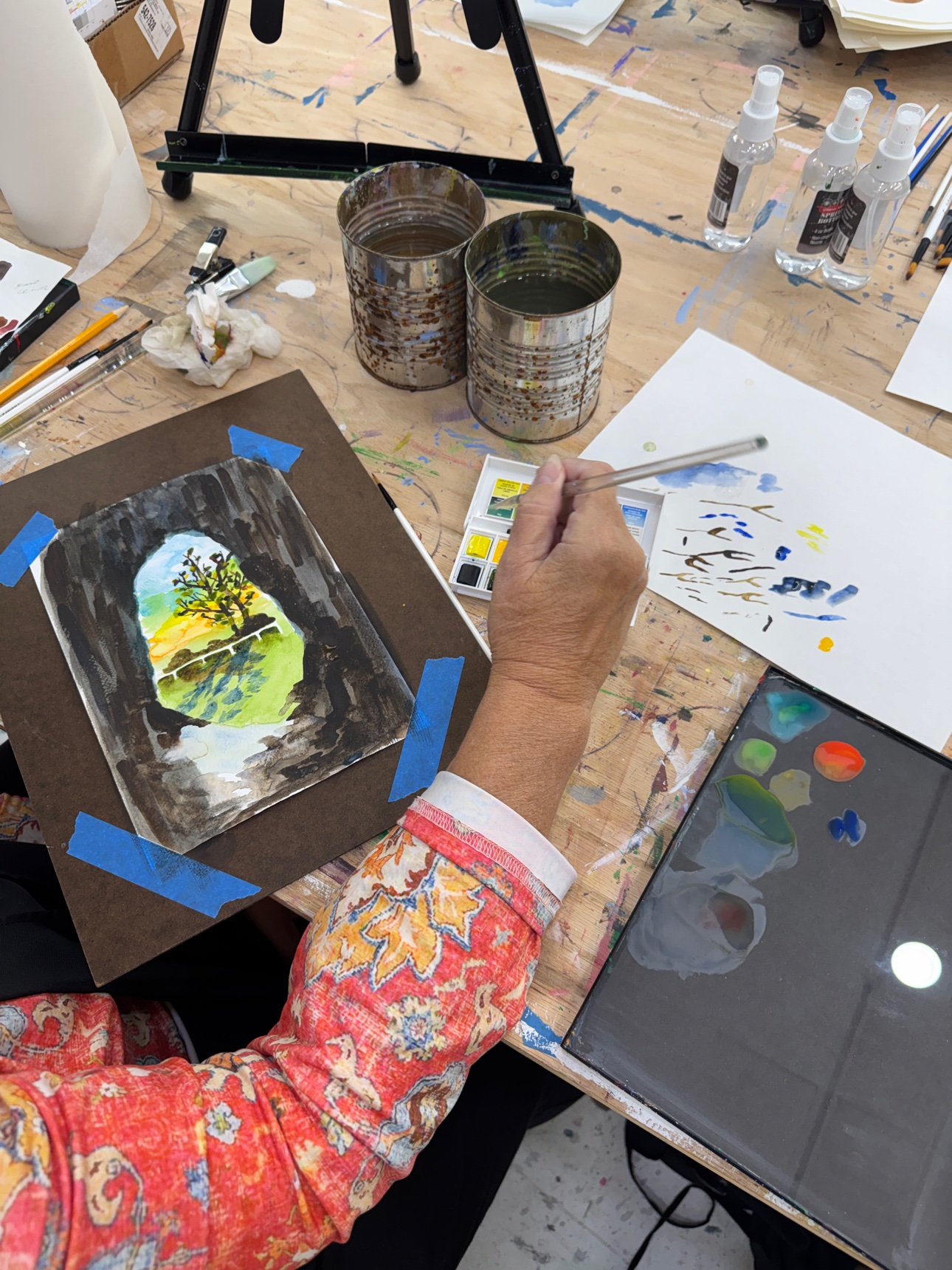
- Watercolor painting class on Thursdays, 6 to 9 PM
Pick the evening that fits your week, or the medium you have always been curious about. An earlier article on this site, acrylic vs watercolor for beginners, goes into each medium in more depth. The point of this page is the step before all of that: getting yourself into the room for the first time.
Why a class does what videos cannot
A lot of adults try to start with videos. It makes sense. Videos are free, private, and available at midnight. Some of it works. But for most people, the video route quietly dies within a few weeks, and it is worth understanding why.
A video cannot look at your painting. It cannot tell you why that shadow went muddy or why the whole thing feels flat. It teaches at an imaginary student, and you are a specific person with a specific painting in front of you. The gap between the two is where most self teaching stalls.
A weekly class gives you things a screen cannot:
- Feedback on your actual painting, in the moment, while it can still change
- A set rhythm, one evening a week that belongs to painting and not to errands
- Other adults learning beside you, which makes being a beginner feel ordinary
- Finished work, because a class has an ending and paintings actually get completed
There is one more thing, and adults mention it often. An evening of painting is a screen free evening. No phone, no feed, no news. Your hands are busy and your eyes are on something real. For people who spend the whole workday in front of a screen, that alone is worth the drive.
Fitting a weekly class into a work life
One evening a week is a smaller commitment than people fear. It is roughly the time of a long movie, once a week. The people who keep coming protect that evening the way they protect anything else that matters. They tell the family it is class night. They leave work on time on that day. After a few weeks, the evening stops feeling like an exception and starts feeling like part of the week, the same as anything else on the calendar.
That rhythm is the real engine. Skill in painting is mostly accumulated evenings. One class will not change much. A steady run of them changes a great deal, and it does so without demanding anything heroic from your schedule.
It also helps to start before you feel ready. Adults tend to wait for the perfect season, the quieter month at work, the calmer stretch at home. Those stretches rarely announce themselves. A three week session is short enough to fit into a busy life as it is, not as you wish it were. Most people who join tell me afterward that they should have started a year earlier. The calendar was never the real barrier. Starting was.
A small, steady group helps more than you think
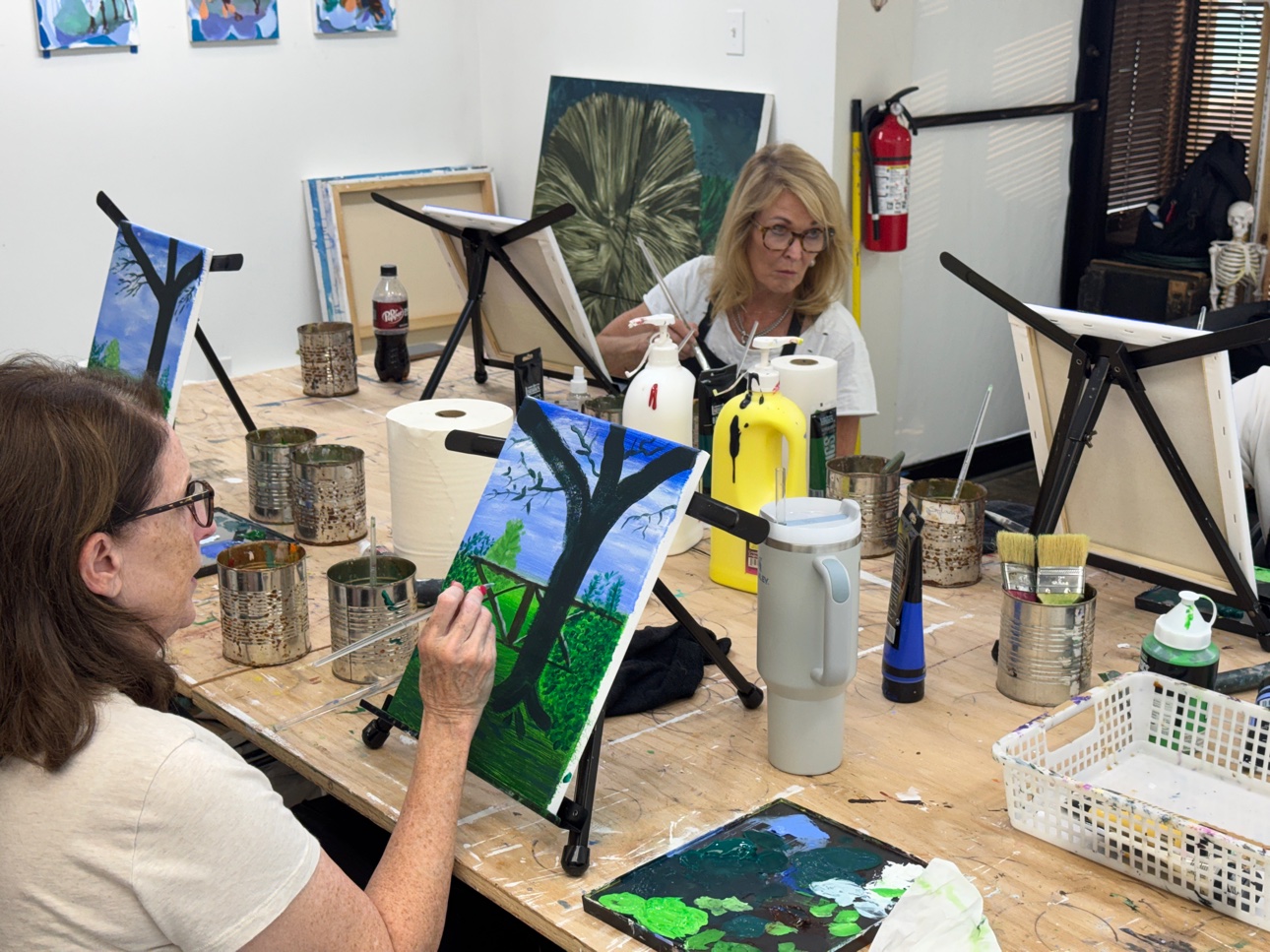
These classes have been full or near-full since February 2026. In practice, that means the groups are small and steady. The same faces come back week after week.
That steadiness does real work. You relax faster around people you recognize. You stop performing and start painting. You look forward to the room as much as to the work. And when you get stuck, you are stuck in good company.
Complete beginners are normal in these classes, not the exception. On any given evening, someone in the room is holding a brush for the first time in decades. Nobody is watching you learn. Everyone is too busy with their own painting, and everyone remembers their own first evening too well to judge yours.
A note for people coming back to art
Some students are not true beginners. They painted years ago, maybe seriously, and life pulled them away. If that is you, an evening class is a gentle way back. You do not have to rebuild a home studio or find the motivation alone at the kitchen table. You just show up, and the rust comes off faster than you expect. Returning students often find that the eye they built years ago is still there. It was only waiting for regular practice.
How sessions and enrollment work
Classes run in multi-week sessions rather than one off drop-in nights. A session gives the group time to settle in and gives your painting time to grow across several evenings, which is where the real learning happens.
The current session dates and the seats still open are listed on the class pages:
- Acrylic painting class, Tuesdays 6 to 9 PM
- Watercolor painting class, Thursdays 6 to 9 PM
Enrollment stays simple. Every material is included in the session. You do not need to buy a supply list or guess what to bring. You can also read more about the academy on my artist website.
One honest note: who this is not for
If you are looking for a one night party class, with drinks and a finished painting to carry home the same evening, this is probably not your place. There is nothing wrong with that format. It is simply a different thing, built for a fun night rather than for learning.
These classes are slower and steadier. They are for adults who want to actually learn to paint, a little more each week, and who are willing to be beginners for a while. If that is you, you will fit in from the first evening.
Your first evening is the hardest part
Everything after the first evening gets easier. The drive becomes familiar. The people become familiar. The painting becomes the interesting problem instead of the scary one.
So the only real step is the first one. Classes meet Tuesday and Thursday evenings, 6 to 9 PM, at the Richardson studio. Acrylic on Tuesdays, watercolor on Thursdays. All materials are provided, and beginners are welcome in the full sense of the word. Class times, session dates, and enrollment are on the class pages at artbeyou.com. Pick an evening, and start.