
Every teacher notices the same pattern. The students who enroll with somebody, a spouse, a friend, a sister, an adult daughter, are the students still painting a year later.
It is not that solo students lack talent or interest. It is that painting, like every weekly practice, has to survive busy seasons, tired evenings, and the occasional discouraging picture. Two people carry a habit further than one. This article is about how learning together works in a small studio class: what it changes, what it does not, and how couples and friends use our courses differently from the one night paint events most people picture first.
Why together works
The reasons are practical, not romantic, and they compound over a session of classes.
- The appointment holds. It is easy to skip a class you attend alone on a tired evening. It is much harder to skip on the person driving over to paint beside you. Attendance is the whole game in learning to paint, and partners protect each other’s attendance.
- You gain a shared language. Within a few weeks, two people who paint together talk about values, edges, and mixtures at the kitchen table. A painting stops being a private struggle and becomes a subject with vocabulary, and that speeds up learning for both.
- Courage doubles. Beginners are braver next to a friendly witness. Trying the bigger canvas, the harder subject, the strong color: all of it is easier when someone at the next easel is attempting their own version.
- You see your progress honestly. Your partner watched your first painting happen. Their opinion of your tenth carries weight no compliment from a stranger can match, and it runs in both directions.
- The paintings fill two walls. Couples end a year with a house quietly filling with work they watched each other make. Those pictures carry the memory of the evenings, which is why people keep them.
A weekly course is not a date night event
Most people meet painting socially through a one night event: everyone paints the same picture, following steps, with a drink in hand. Those evenings are fun, and we run private versions of them as workshops. But a course is a different thing, and couples who confuse the two sometimes arrive with the wrong expectation.
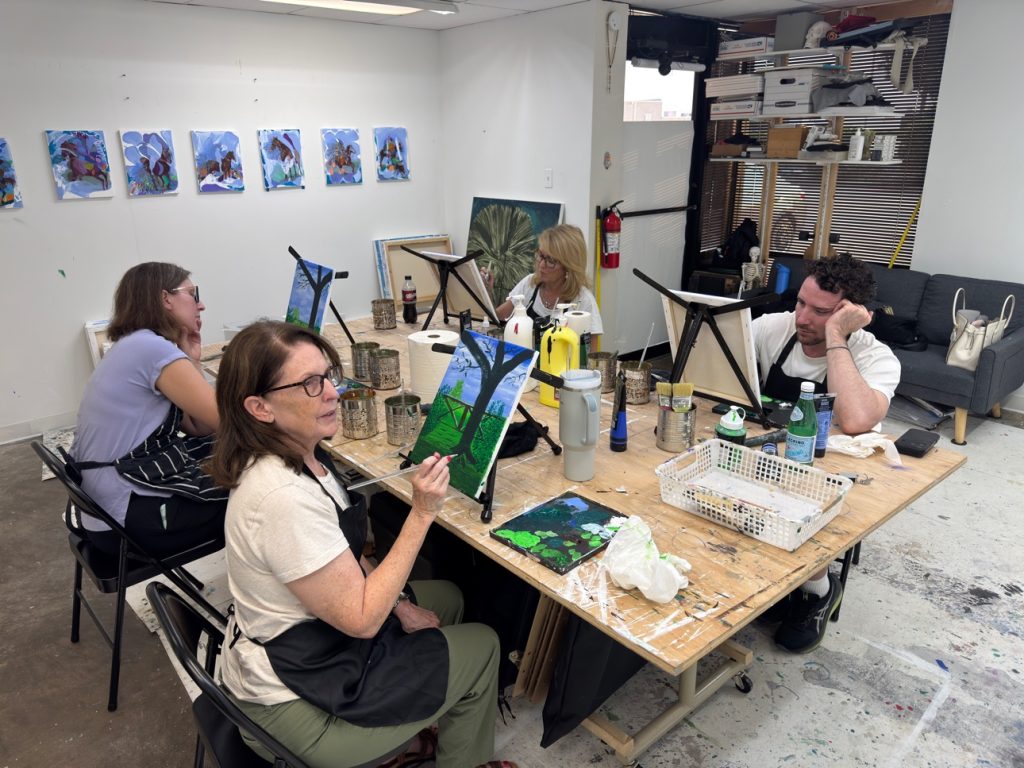
In a weekly course, nobody paints the same picture. Each student works on their own painting, at their own level, with the teacher demonstrating technique and correcting each canvas individually. You and your partner sit in the same room and work on entirely different paintings, a landscape and a portrait, a copy study and an original. The togetherness is in the practice, not the product.
That difference is exactly why courses hold people for years while event nights are remembered fondly and not repeated. One is entertainment. The other is a skill, and skills are built with somebody beside you more often than alone.
Different levels in the same room
The question pairs always ask: what if one of us is better? One partner drew in school, the other has never held a brush. One friend painted for years, the other is starting at zero.
In a small class of four to six students, this is normal and handled by the format itself. The teaching is individual. Your painting gets your correction; your partner’s gets theirs. A beginner is never asked to keep up with an advanced student at the next easel, because they are not working on the same problem.
What actually happens to mixed pairs is encouraging. The beginner improves fast, fed by the teacher’s corrections of the stronger paintings around them. The stronger painter, watching a beginner’s fresh eye, remembers things they had automated. And the comparison problem students fear turns out to be mild in practice, because two people painting different subjects in different styles simply do not compete the way they expected to.
What a shared class looks like, week by week
Pairs sometimes imagine they will work like a team on one painting. That is not how it goes, and the real rhythm is better.
Week one is orientation for both of you: materials, the room, the first studies. Both paintings look rough, which is a mercy, since neither of you is ahead.
Weeks two and three are where the pair dynamic appears. You develop opinions about each other’s work, kindly or otherwise. The teacher’s corrections give you a shared reference point, so comments between you turn from taste (“I like it”) into observation (“your shadow side went too light”), which is the moment the two of you start actually teaching each other between classes.
By the end of a session, each of you has finished work that the other watched being made, layer by layer. Taking those paintings home is different from buying art or making it alone. You know what the left corner cost. You were there when the sky nearly failed in week three. Finished paintings in a shared practice carry their history visibly, at least to the two people who were present.
Across a year, the pattern deepens in a way solo students notice with envy: pairs develop specialties. One becomes the sky painter, the other the one who finishes edges properly. Advice inside the pair gets specific and useful, and the pair effectively gets two educations for the price of attendance, theirs and each other’s.
Friends: the standing appointment
For friends, the class often becomes the structure of the friendship itself: a fixed evening each week that does not need arranging, does not revolve around food or spending, and produces something. Several patterns recur in the studio:
- Old friends who were drifting into occasional lunches, now meeting weekly with a project in common.
- Neighbors who carpool and hold each other’s attendance through sheer logistics.
- Work friends who wanted one part of the week where nobody talks about the office, and the easel enforces it.
- Sisters and brothers, sometimes local, sometimes one visiting for a session while in town.
The common thread is that painting gives friends something to do with their hands while they talk, or do not talk, which adults often find easier than another dinner reservation.
Couples: what changes at home
Couples describe a specific side effect the teachers did not predict: the class changes what hangs on their walls and what they notice on trips. Two people who paint together start visiting museums differently, standing longer, arguing cheerfully about how a sky was built. They photograph subjects for each other. They give each other paintings for birthdays, which land differently from anything bought.
For retired couples, the course also does quiet structural work: a shared project in a stage of life where projects often separate. Both people are beginners together, or one teaches the other patience, and either arrangement seems to be good for a marriage, though we claim no data beyond full classes and low dropout.
Parents, grown children, and other combinations
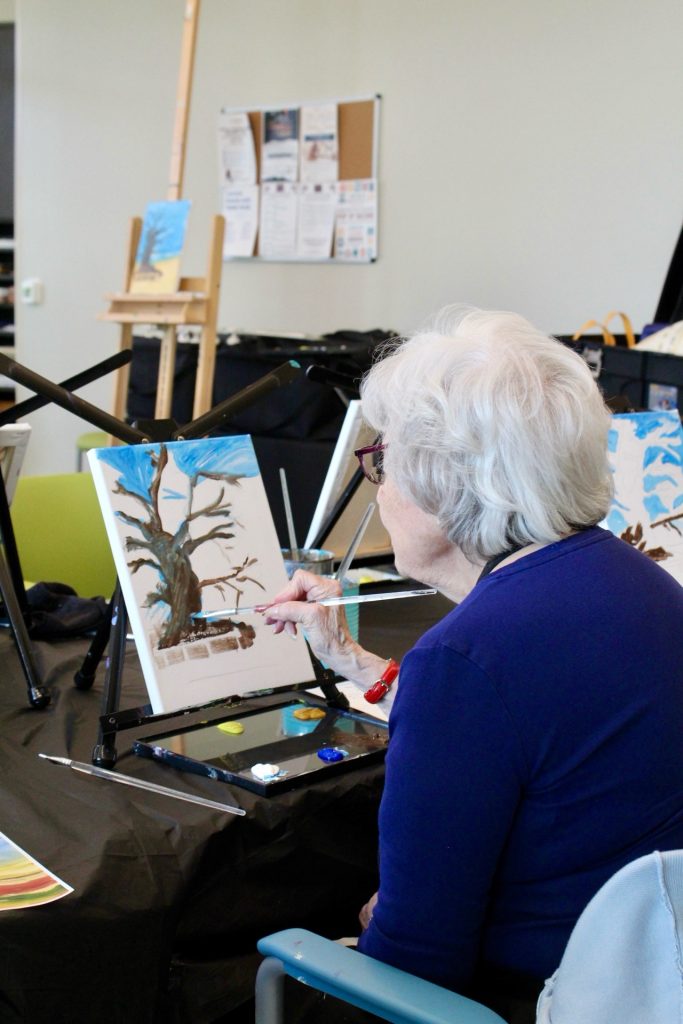
Some of our most consistent pairs are a parent and an adult child. The class gives them a weekly meeting that is not a meal and not an errand, with a skill being built side by side and, often, a gentle reversal in who encourages whom. Grandparents bring grandchildren to arranged sessions as well; children’s teaching is organized separately from the adult courses, and the art classes overview explains the current options.
Giving the class to somebody
A large share of paired enrollments start as a gift: one person receives a session and the giver, wisely, enrolls too rather than sending them alone. Our gift art class covers a full session, and the person receiving it chooses the course and the dates. It works best exactly this way, as an invitation rather than a voucher.
Private sessions for your own group
If your group is bigger than a pair, or you want the room to yourselves, private group sessions and one time workshops are arranged through the art workshops page. Groups paint together in your space or at the studio, everyone finishing a picture in about ninety minutes. It is the event format, done at the studio’s standard, and many pairs who first meet us at a private event later enroll in a course together.
The honest limits, and how pairs handle them
Learning together is not magic, and it is fair to name the friction points, because pairs who expect them sail past them.
- One of you will have a bad painting while the other has a good week. It alternates, sometimes for a month. The rule pairs adopt is simple: the struggling one gets encouragement and no unsolicited surgery on their canvas. Advice in the studio comes from the teacher; partners supply morale.
- Tastes diverge. One of you will love loose, painterly work; the other will want precision. This is a feature. Two different directions at home means two different walls, two different conversations, and twice the looking when you visit a museum together.
- Life interrupts one schedule at a time. Travel, work, family: one partner misses two weeks while the other attends. Classes are built on individual paintings, so the returning student picks their own canvas back up where it waits. The pair is a support, not a chain.
- It is not therapy and not a competition, unless you decide to make it one, and we recommend against both. It is a craft learned side by side, which turns out to be enough.
How to start, as a pair
- Choose the medium together or not at all. Some pairs take the same course, acrylic on Tuesdays or watercolor on Thursdays. Others split, one in each, and compare notes at home. Both work; the shared evening is the more common choice.
- Read the first class guide. Our article on your first painting class covers what happens and what to bring, which is nothing.
- Expect the first paintings to differ wildly. That is the system working. By the fourth week, both of you will be visibly better, at different things, and that asymmetry becomes one of the pleasures of it.
- Protect the evening like an appointment with anyone else. Pairs who treat the class as movable lose it to errands, overtime, and tiredness. Pairs who treat it as fixed find that the rest of the week quietly arranges itself around it, and the habit survives its first busy season.
The class pages carry the current sessions and open seats, so the only decision left is which of you admits they wanted to do this first.
Painting alone is a fine thing; painters have done it for centuries. But learning is social, habits are social, and a weekly class survives in a real life much better with two people defending it. If there is someone you keep meaning to spend real time with, this is a standing answer to that intention. The work itself, mine and the studio’s, is at my website and the academy page, and pairs of students and their finished paintings appear on our Instagram and Facebook.