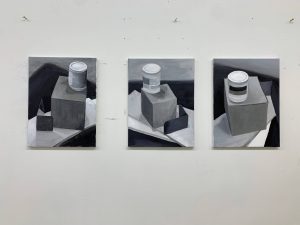
Search for painting classes in Dallas and the listings blur together. Fun. Relaxing. No experience needed. They all sound like the same evening.
They are not the same evening. Underneath the listings there are a few differences that decide whether you actually learn to paint or simply have a pleasant night out. Both are fine products. They are just different products, and the listing rarely tells you which one you are buying.
I teach painting classes for adults in Richardson, just north of Dallas, so I have opinions here. I also have a bias, and I will name it: I run small studio classes, and this guide explains why I think that format works. Where another format suits you better, I will say so.
First, decide what you are buying
There are really two products sold under the words painting class.
The first is entertainment. You arrive, you follow steps, and you leave the same night with a finished picture and a good evening behind you. There is nothing wrong with that. It is a night out, like a cooking class or a trivia night.
The second is instruction. You come back week after week. The paintings get harder as your hands learn. A teacher watches your work and corrects it. You leave a session with skill you did not have when it started, not just a picture.
Decide which one you want before you compare prices or locations. Most disappointment I hear about comes from buying one and expecting the other. The person who wanted to learn finds a party. The person who wanted a party finds homework. Both go home annoyed at a class that did exactly what it was built to do.
Who teaches, and how
This is the difference I would check first.
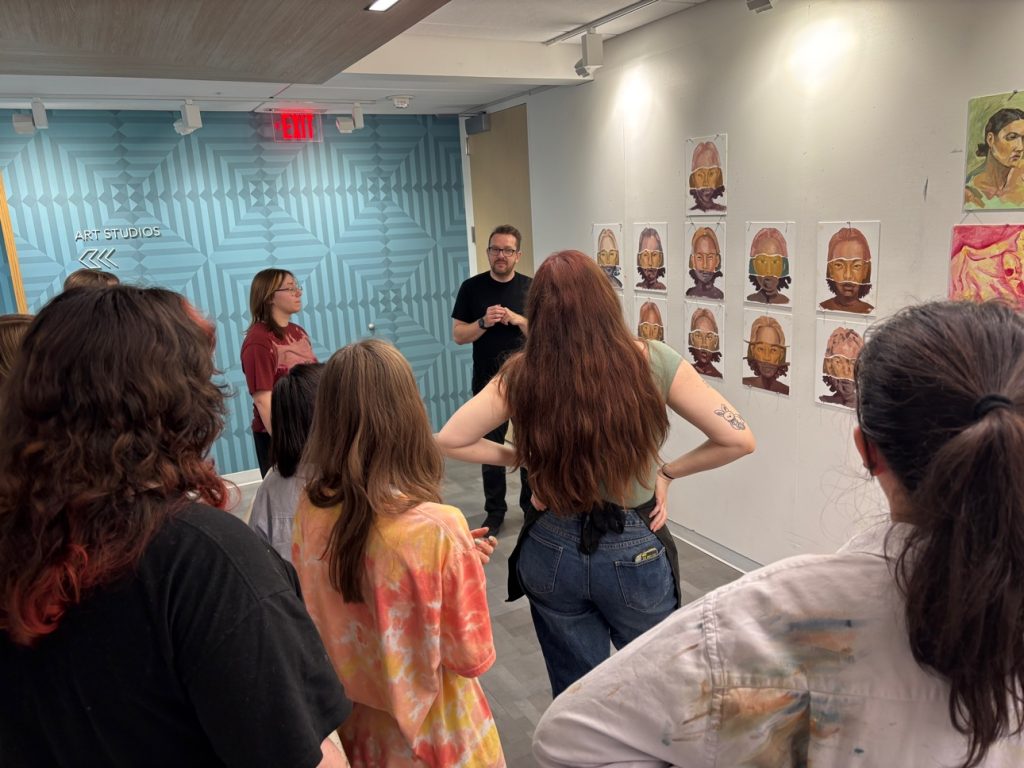
Ask who leads the class and what they do when they are not leading it. A working painter teaches from paintings they are making right now. They can look at your canvas and tell you why a shadow went muddy, because they solved that problem on their own canvas last week. A host following a script can lead a room through steps, but the script is all they have. When your painting does something the script did not predict, the help runs out.
Ask also how feedback works. In a class built for learning, the teacher looks at your actual painting while you work and talks about that painting. Not painting in general. Yours. That is where the learning lives. A demonstration at the front of the room is useful, but it is not the same as someone standing at your easel and saying: that color is too warm, and here is the mix that fixes it.
I am a working painter. I exhibit my own paintings nationally, including a solo exhibition in Ohio opening in November 2026, and I teach the classes at my studio myself. That does not automatically make my class right for you. It does mean the feedback comes from a daily practice, not a manual.
Group size is not a detail
Group size decides how much of the teacher you actually get.
In a room of twenty or thirty people, the teacher is a performer. You watch them paint, you copy as best you can, and if your painting goes wrong in minute twenty, you may wait a long time for help, or never get it. For a night out, that is acceptable. For learning, it is a real limit.
In a small group, the arithmetic changes. The teacher reaches every easel several times in an evening. Questions get answered while the paint is still wet and the answer can still change the painting.
My studio classes in Richardson usually run with 4 to 6 people. That is small on purpose. It is also why the classes stay full or near-full, as they have been since February 2026. A full class is annoying when you want a seat, but it is also information: other students found the format worth returning to.
If you prefer a big, social room with energy and noise, a larger class may suit you better. Small and quiet is not to everyone’s taste.
What is included in the price
Class prices are hard to compare, because the price rarely covers the same things.
Some classes hand you a supply list. You buy paints, brushes, canvas, and paper before the first evening, and the real cost of the class is the fee plus a shopping trip you did not budget for. For a beginner there is a second problem: you do not yet know what to buy, and the wrong supplies make learning harder.
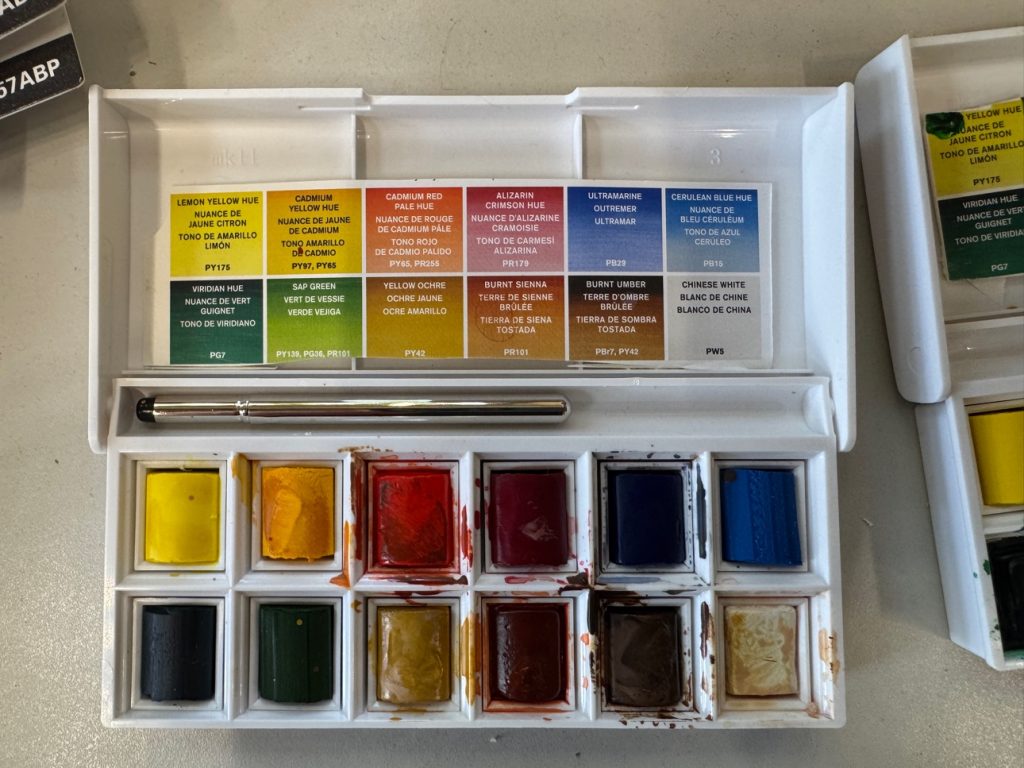
Other classes include everything. You show up and the materials are waiting. For a first class, I think included materials are worth real money, because you can try the medium before you invest in it.
At Art Be You, every material is provided: paint, brushes, paper, and canvas. Students bring nothing. The session price covers all of it. There is no list and no trip to the art store.
One more thing to check wherever you book: what the medium does to your clothes. Dried acrylic is permanent. Any class should tell you that up front, and work clothes or an apron should be part of the plan.
One night, or a session
A single evening and a multi-week session teach different amounts, and it is worth being plain about it.
One night is enough to show you that painting is enjoyable. It is not enough to build skill. Skill in painting is mostly accumulated practice with correction: mix, paint, get it wrong, find out why, paint again. That loop needs more than one evening to turn even once.
A session gives the loop time to turn. You come back, the teacher remembers your painting and your habits, and the work gets a little harder each week because your hands are ready for it. The jump in what students can do between the first week and the third is the main reason I teach in sessions.
At Art Be You, classes run in multi-week sessions through the year, and the calendar takes the holiday weeks off. If you are still choosing between the two paints before you commit, I wrote a comparison of acrylic vs watercolor for beginners that walks through how each paint behaves.
Neither choice is a mistake. Just buy the one you actually want.
The room you paint in
Where the class happens changes how it feels and how well you can work.
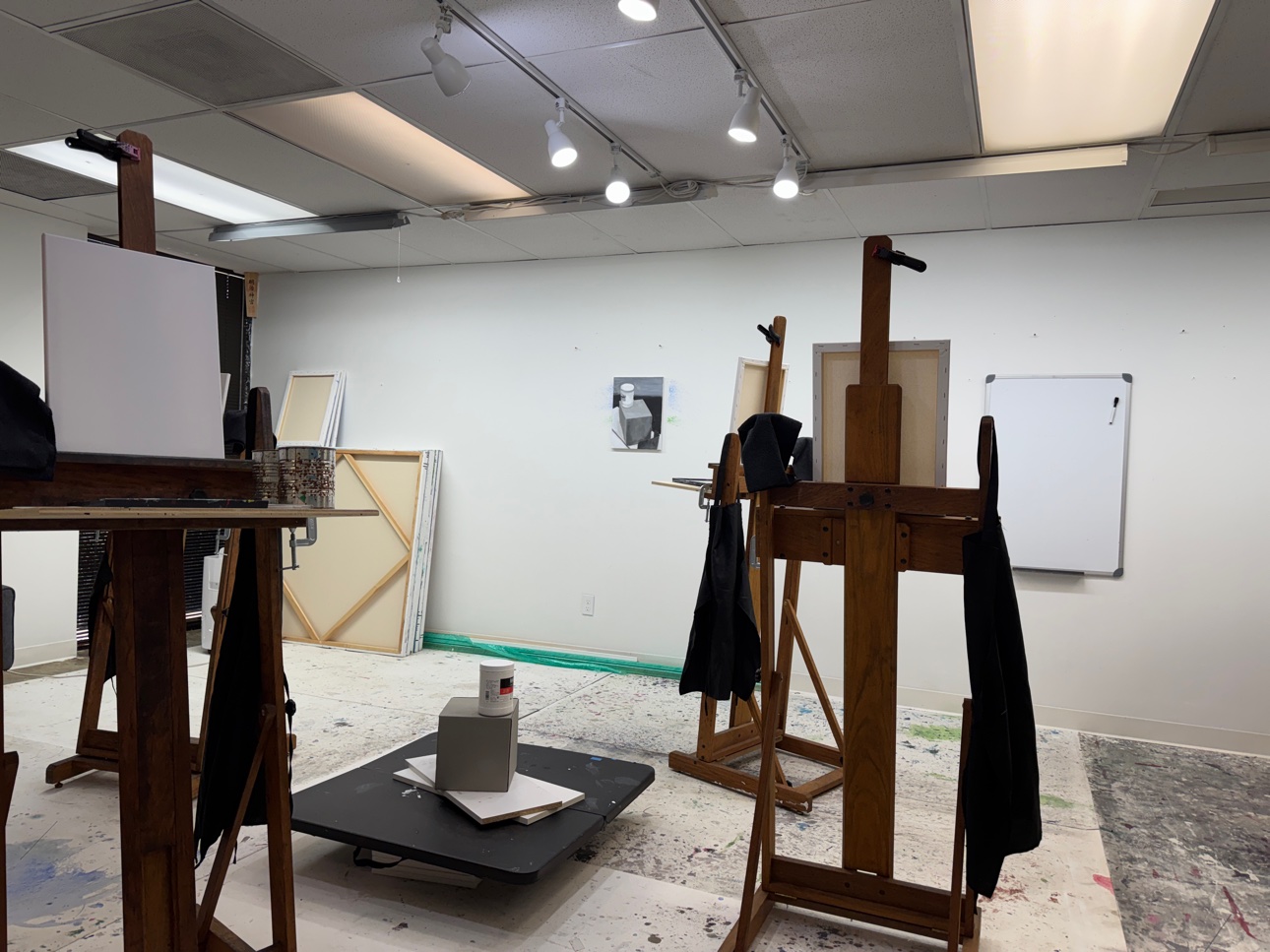
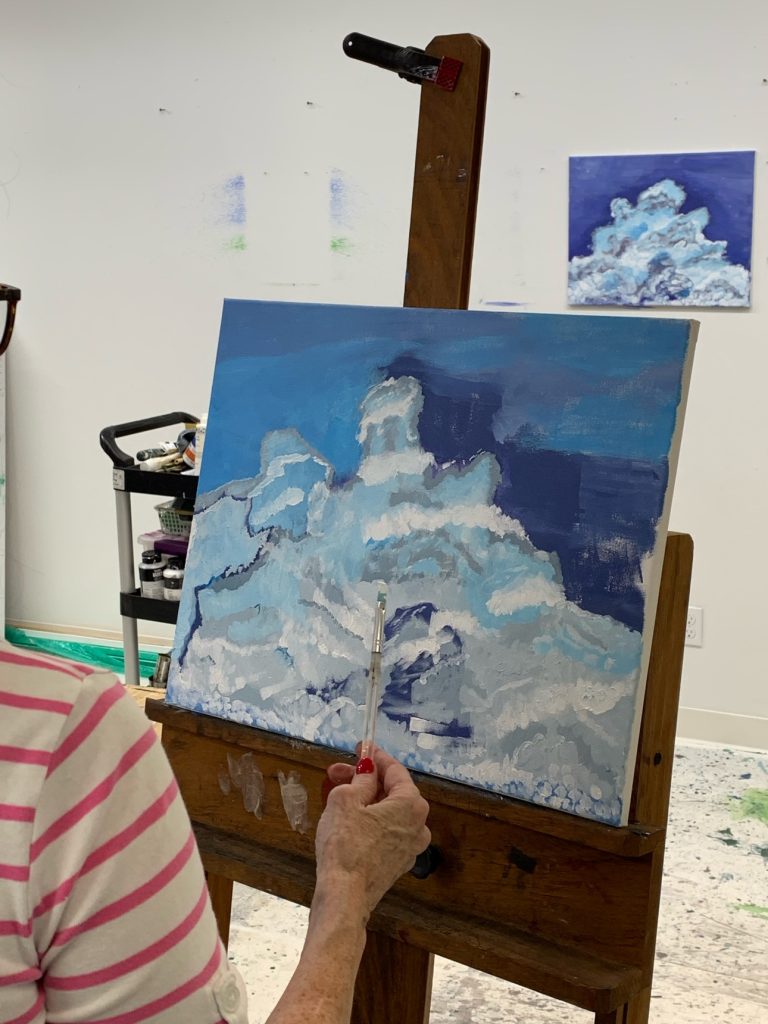
A working studio is set up for painting and nothing else. Easels stand ready. The light is chosen for seeing color. A wet painting can sit undisturbed. There is space to step back from your canvas, which is a real part of painting.
A restaurant corner is set up for eating and adapted for painting. It can be fun and social, and for a night out the setting is part of the appeal. For focused work, the compromises show: cramped tables, warm light that lies about color, and a hard stop when the room is needed for something else.
My classes meet in my studio in Richardson, at 500 E. Arapaho Rd, Suite 101. It is a working painter’s studio first, and the classes use the same easels and setup I use for my own work during the day.
A schedule you can actually keep
The best class is the one you attend, repeatedly. So look at the schedule with your real week in mind, not your ideal one.
For most working adults, that means evenings. A class at 6 PM on a weekday sits after work. A class across town at the same hour is a different commitment from one fifteen minutes away, and the drive is often what kills a good intention by the third week.
My classes run in the evening: acrylic on Tuesdays and watercolor on Thursdays, each from 6 to 9 PM. I wrote more about how that fits a working life in my guide to evening classes for adults in Richardson.
Also check the calendar honestly. Sessions that skip holiday weeks save you paying for evenings you cannot attend, and our sessions do exactly that.
How the teaching is paced
Ask how a class is structured across a session, because teachers differ here and both ways have a cost.
Some classes follow a fixed plan: this project in week one, that one in week two, printed in advance. The advantage is predictability. You know exactly what is coming. The risk is that the plan moves at one speed and people do not. If the group is stuck on mixing color, the plan still moves on.
I run no fixed week by week plan. The pacing follows the people in the room. If a group needs another evening on mixing, we take it. If a group is ready to move faster, we move. I would rather teach the people in front of me than follow a chart.
That suits students who want teaching that responds to them. If you prefer a published curriculum you can hold from day one, a fixed plan class may be the better fit. Know which kind of student you are.
A short checklist before you book
- Is this class entertainment or instruction, and which one do I want?
- Who teaches it, and do they paint themselves?
- How many students share the teacher?
- Are materials included, or is there a supply list to buy?
- Is it one night or a session, and does the learning build week to week?
- Where does it meet, and is the room set up for painting?
- Does the schedule fit my real week, including the drive?
- How is the teaching paced: a fixed plan, or paced to the group?
How Art Be You fits this list
So you can place my classes on the same checklist: I teach both classes myself, as a working painter. The groups are small, usually 4 to 6 people. Every material is included in the session. Classes run in multi-week sessions, in a working studio, on weekday evenings, and the pacing follows the group.
The acrylic painting class meets on Tuesdays, 6 to 9 PM. The watercolor painting class meets on Thursdays, 6 to 9 PM. The class pages carry the current session dates, the price, and the seats still open, so check availability and the next sessions there. Sessions run through the year, and a new semester starts in the new year, for anyone who cannot start right away.
If you want the background on how the teaching grew out of my own studio practice, that is on the academy page of my artist website.
Whichever class you choose, in Dallas or anywhere else, choose it on the criteria above and not on the listing photo. The photo is the one thing every class gets right.