If you teach painting at a university, you know the pattern of a normal term. Students listen to lectures, work alone in the studio, and get most of their feedback after a painting is already finished. A visiting artist can break that pattern in a single session, if the visit is built around painting and not around a talk.
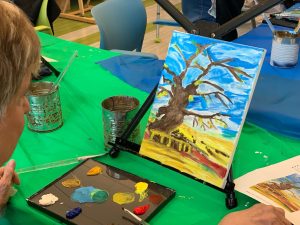
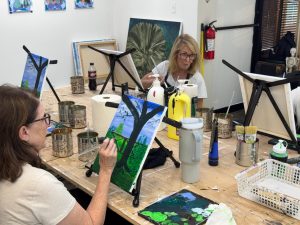
That is the kind of visit I run. I bring painting workshops to universities in Texas and beyond, and I lead every session myself. Students paint for most of the time. They work on real paintings, not exercises, with a working painter walking the room and helping at each easel. When the session ends, every student has real work to show for the hours.
I have run this format for university students before, and it works because it is simple. I am a working painter. I exhibit my paintings nationally, and I teach evening classes at my own studio in Richardson. The university workshops come out of that same daily practice. Everything I show students is something I do at my own easel, in my own work, during the same week I am teaching it.
I also keep the talking at the start short, on purpose. Students remember what their hands did far longer than what they heard. So the demonstration is brief, the painting time is long, and the feedback happens while the paint is still wet and a correction can still change the work in front of them.
What the workshop looks like
A workshop runs 2 to 3 hours, usually 3. That length matters. In 3 hours, a student can start a painting, work through the difficult middle stage, and bring the piece to a point where it can be judged honestly. A shorter visit turns into a demonstration with a little painting around the edges. Three hours is painting, with a demonstration at the start.
Groups are up to 20 students. That number is deliberate. With 20 students, I can reach every easel several times during the session and still leave people the room they need to work. In a much larger group, some students would spend the session watching instead of painting, and watching is not the point of the visit.
We work in acrylics only. Acrylic suits a single session well. It dries fast, it allows changes, and students can carry their paintings away when the session ends. There is no drying time to manage and nothing that needs special handling afterwards.
A group is rarely all at one level, and that is fine. Some students have painted for years. Others are early in their training. Because I teach at each easel rather than only from the front, each student gets help at their own level, and nobody is held back or left behind by the pace of the rest of the room.
What I bring, and what the school provides
The school provides the room and the students. That is the whole list on your side.
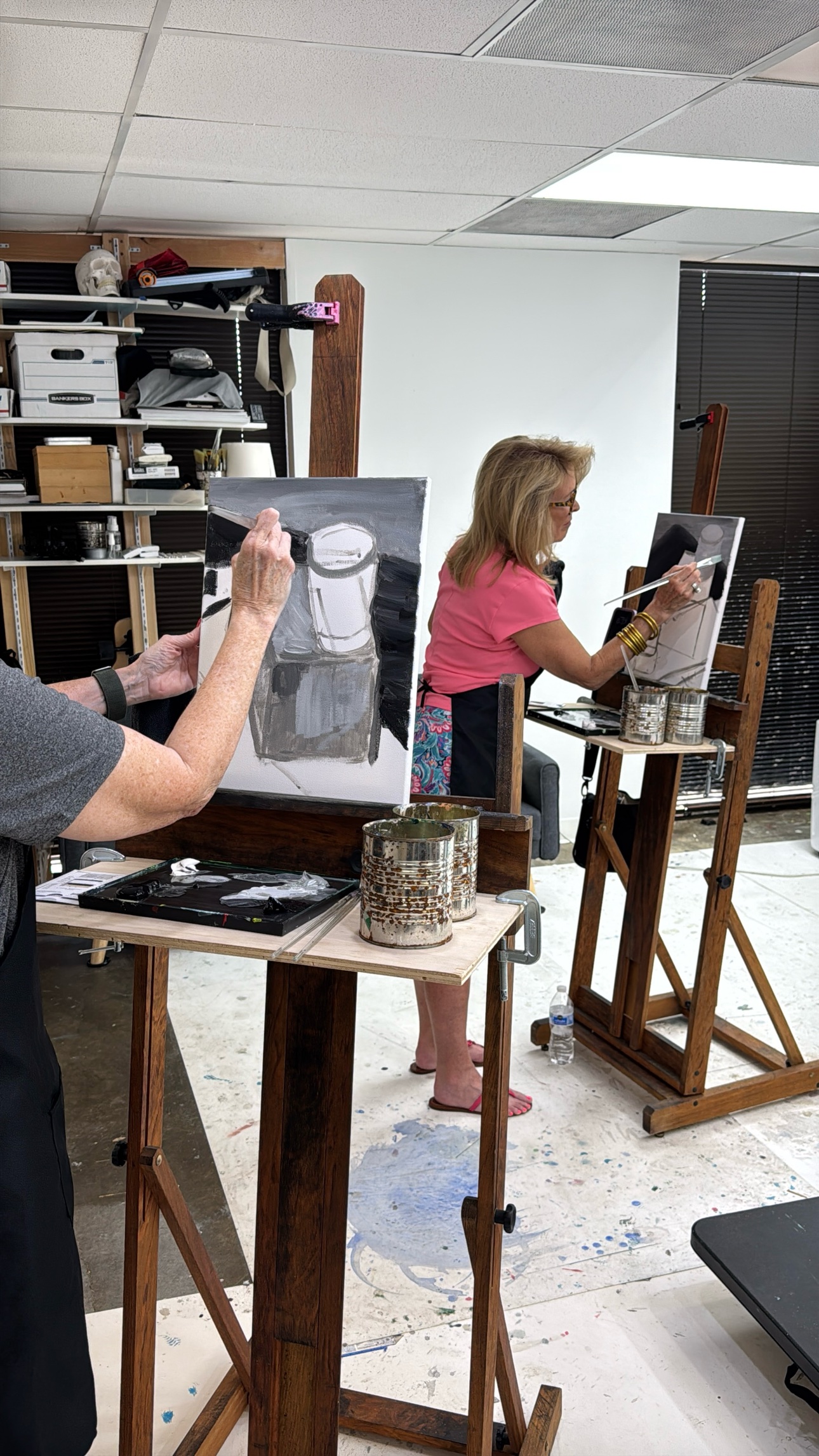
I bring everything else:
- Paints and brushes
- Palettes for every student
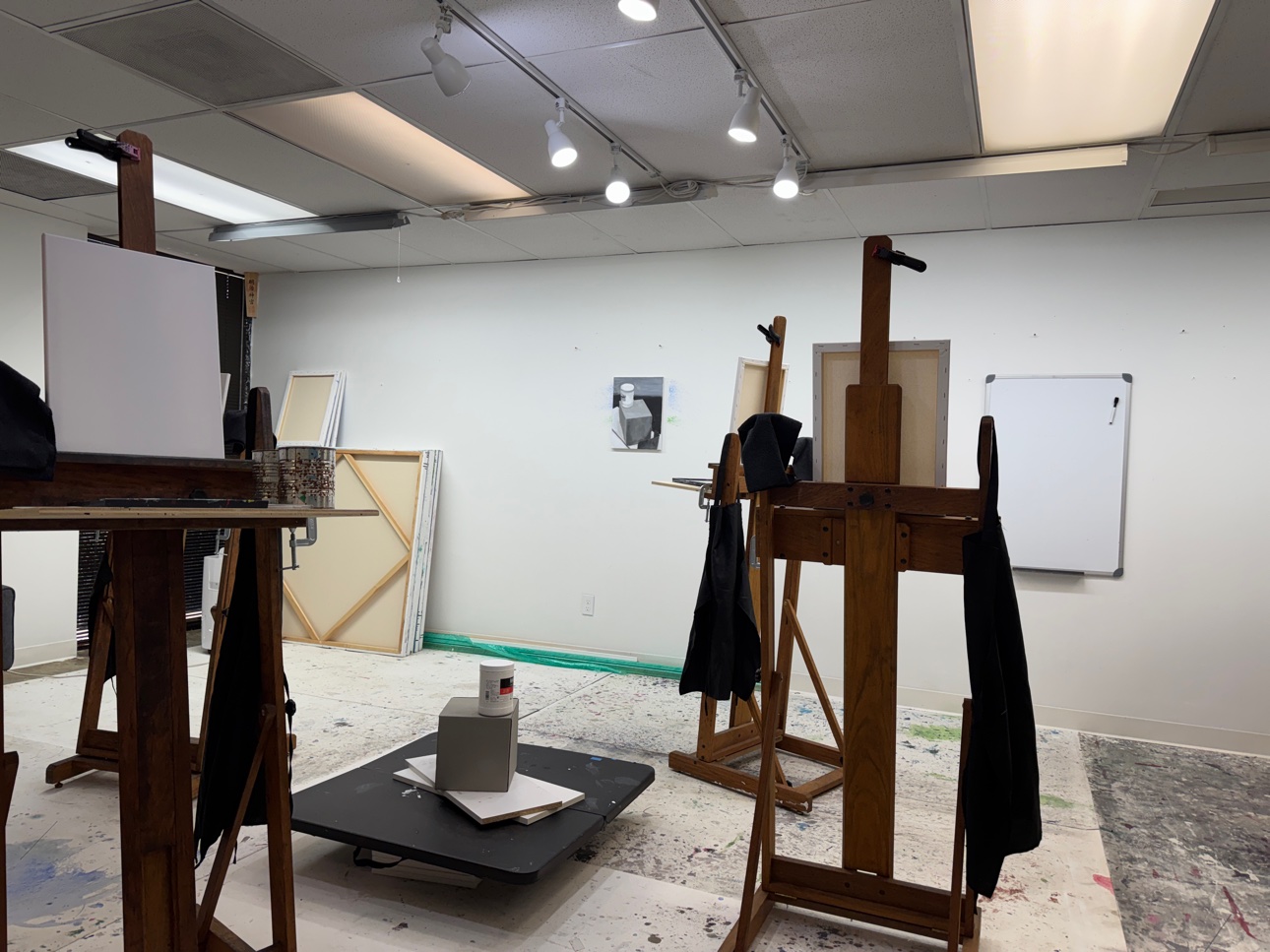
- Table easels
- Aprons
- Water containers
- Canvases or paper
I set up before the session starts and I pack up after it ends. Your department does not need to order supplies, check out equipment, or store anything when I leave. If your students usually pay a materials fee or work from a supply list, none of that applies to this session. They walk in with nothing and start painting.
One practical note about distance. For schools more than 2 hours of driving from Dallas, the school provides lodging for me. Everything else about the setup stays exactly the same.
How I teach during the session
The demonstration comes first
The session opens with a short demonstration. I show the group what we are going to paint and how I would approach it. Students watch the first steps before they have to take them, and they can ask questions while the approach is still in front of them.
In the demonstration I show more than technique. I show how a painting gets started properly, how the first decisions set up everything that comes after them, and where students usually go wrong in the opening minutes. Most of the problems I correct later at the easels begin right there, in the first decisions, so it is worth watching them done well once.
Then the painting starts
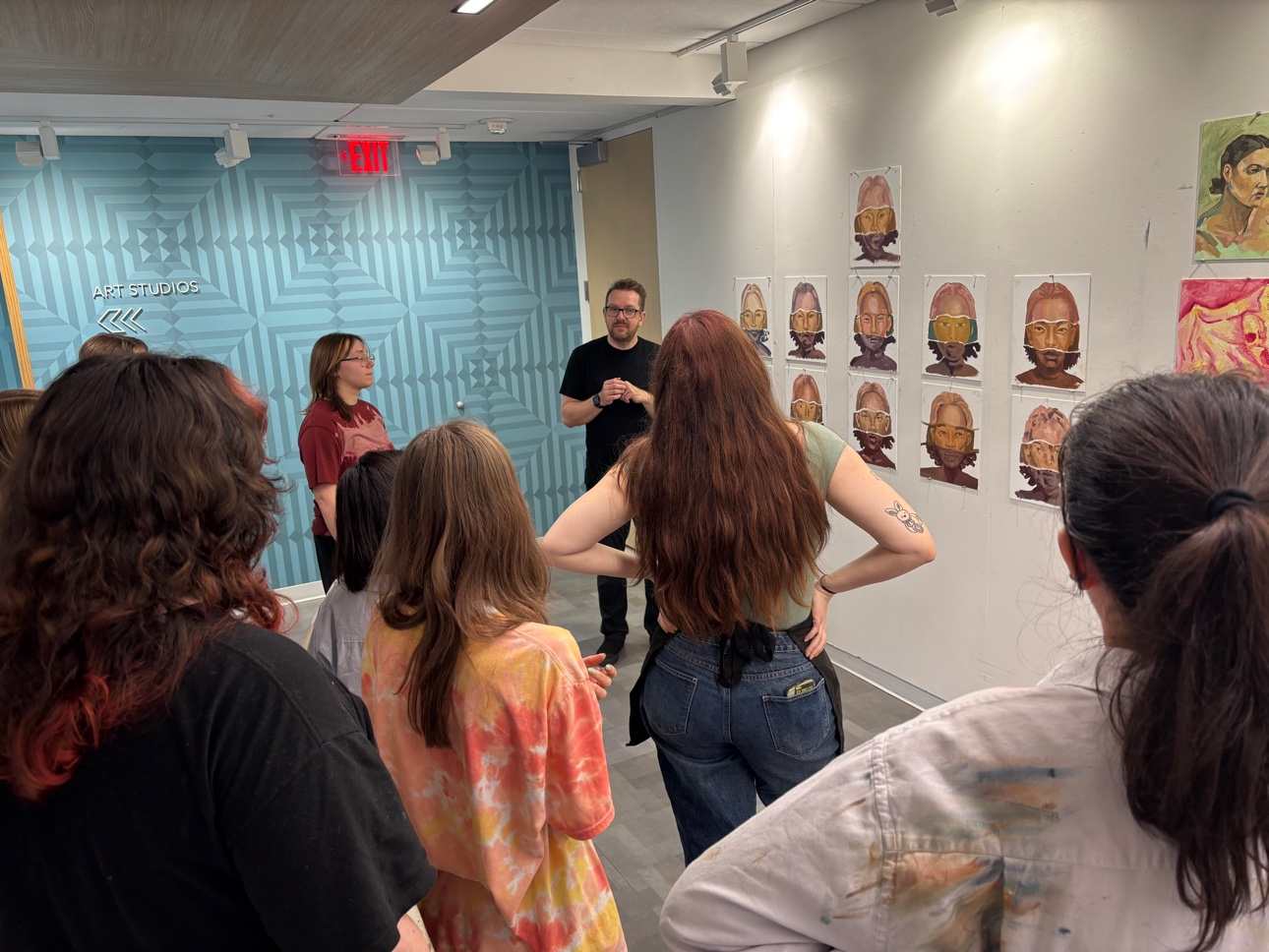
After the demonstration, students paint, and I walk the room. This is the part of the session that matters most. I stop at each easel, look at the actual painting in front of me, and help with the exact problem that student is having. Sometimes the help is one sentence. Sometimes I pick up a brush, show the move on the painting, and hand the brush back.
I do not teach from a fixed chart. Every group is different, so the pacing follows the people in the room. If the group needs more time on one stage, we take more time. If everyone is ready to move on, we move on. A visiting session is short. I would rather spend it on what your students actually need than on a plan I wrote before I met them.
Topics we can build the session around
A workshop can stand on its own, or it can support what your class is already studying. We agree on the topic before I come, and I build the session around your students and where they are in their work.
One format I run is a skin tones workshop for painting students. Treat that as one example, not a menu. The better way to choose a topic is a short conversation. Tell me what your students are working on and where they are getting stuck, and we shape the session to fit.
What students get out of it
Students get three things that are hard to fit into a normal teaching week.
The first is time. Three hours of painting, with no other agenda, is rare for a student carrying a full course load. Skill grows in stretches like that, not in fragments between other obligations.
The second is correction while the painting can still change. Feedback after a piece is finished has its place, but feedback at the easel changes the painting in front of the student. That is where habits form, and habits are what students keep long after the visit is over.
The third is contact with a working practice. Students watch how a painter who exhibits nationally starts a painting, adjusts when it goes wrong, and decides when it is done. For many students, it is the first time the distance between student work and professional work looks small enough to cross, because they saw someone cross it at the next easel.
How booking works
Scheduling is arranged directly with me. There is no agency and no booking office in between. We talk about your class, the topic, and the size of the group, and we set a date that fits your academic calendar. I plan these visits around the term, the same way you do.
If your department wants the visit to sit at a particular point in the term, alongside work your class is already doing, say so in your first message and we will place it there. That is usually how the best sessions happen. The workshop supports the teaching instead of interrupting it.
If you want background on my teaching before we talk, the academy page on my artist website covers the academy and how I teach.
To start the conversation, reach me through artbeyou.com. Tell me where you teach, roughly how many students you have in mind, and what they are working on. I will take it from there.
Questions professors ask me
- Do students need to bring anything? No. I bring every material, including aprons.
- How many students can take part? Up to 20, so that I can reach every easel during the session.
- How long does the session run? Between 2 and 3 hours, usually 3.
- What does the school need to arrange? The room and the students. That is all.
- Do you need our easels or supplies? No. I bring table easels and every material myself.
- Can the topic match what our class is studying? Yes. We agree on the topic before the visit, and the session is built around your students.
Your students will leave with paint on their hands and a painting that is genuinely theirs. That is the point of the visit, and it is what a good workshop should do.
The same approach runs in my own studio: the acrylic painting class and the watercolor painting class meet weekly in Richardson. If a class is a better gift than an object, an Art Be You gift card covers a full session. The academy posts class and workshop photos on Instagram and Facebook.