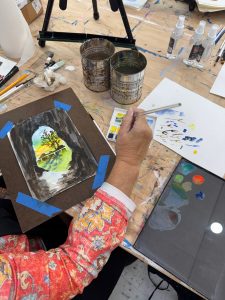
Watercolor is paint carried by water. That fact makes the paper more than a surface. The paper holds the water and controls how far a wash spreads. It also provides the white of the painting, because the lightest areas are usually left unpainted. A good sheet makes all of this easier. A poor sheet fights the painter at every step.
Beginners often blame the paint or the brush first. Sometimes the real problem sits underneath both of them. Thin paper ripples. Soft paper pills. A smooth sheet lets washes slide. A rough sheet breaks up detail. Paper is sold by weight and by texture for a reason. Those two facts explain most of what a sheet will do when water touches it.
This article covers weight, texture, sizing, fibers, and formats. Most of all, it explains why paper buckles when wet, and what stretching and taping do about it.
Why paper matters more in watercolor
Water soaks into a watercolor sheet, and the sheet changes while the painting is made. It swells and softens. As it dries, it shrinks again. Every wash is a small cycle of wetting and drying.
A good sheet stays workable through several washes, lets color lift back off in places, and dries evenly. A poor sheet can wrinkle after one wash, or let color sink in so fast that the wash looks dull. Paper also sets the brightest value in the picture. Watercolor paint is transparent, and light reflects back from the white paper below it. A bright sheet gives clean color.
What weight means: pounds and grams
Paper weight describes how heavy the paper is. Heavier paper is almost always thicker and stronger. Two systems appear on packaging.
The first is pounds, written as lb. It comes from the weight of a stack of 500 sheets at a standard size. The second is grams per square meter, written as gsm. It measures one square meter of the paper, and it makes comparisons across brands easier.
The common watercolor weights group neatly:
- 90 lb, about 190 gsm. Light watercolor paper. It suits sketches, color tests, and small studies with little water. It buckles quickly under a full wash.
- 140 lb, about 300 gsm. The standard weight for most watercolor painting. It handles normal washes well. Many painters still tape or stretch it for wet work.
- 300 lb, about 640 gsm. Very heavy paper. It stays much flatter when wet and usually does not need stretching.
Weight alone does not tell the whole story. Two sheets can both read 140 lb and behave differently, because fiber, sizing, and surface also matter. Test any new paper with one graded wash first. The test shows how it takes water, how it dries, and how much it moves.
Texture: hot press, cold press, and rough
Texture describes the surface finish of the sheet. Watercolor paper is made in three main finishes, named for how the paper was pressed. Each finish changes how a wash looks.
Hot press paper
Hot press paper is smooth. It was pressed with heat, which flattens the surface. Washes dry with sharp edges here, and fine lines stay fine, so detail work is easier. The trade off is water control. A wash can slide and pool, and blooms are more likely for a beginner.
Cold press paper
Cold press paper has a medium texture. It is the most common choice, and the one most beginners meet first. Its surface has small bumps and valleys. A wash settles into the valleys and skips lightly across the tops, which gives watercolor its familiar broken sparkle.
Rough paper
Rough paper has a pronounced, deeply pitted texture. Washes granulate and break up strongly here, which suits subjects such as stone and bark. Fine detail is hard, because lines break as they cross the pits.
Brush size and water load affect all three surfaces, and our article on paint brushes for beginners covers the tools for working on each one.
Sizing: the hidden layer
Sizing is a treatment added during manufacture, sometimes also to the surface of the finished sheet. It controls how quickly water and pigment sink into the fibers.
On a well sized sheet, a wash sits on the surface briefly before soaking in. That pause gives the painter time to move the wash, soften an edge, or lift color back. Colors stay brighter, because more pigment remains near the surface. On paper with little sizing, water rushes straight in. The wash grabs and stains, and lifting becomes difficult. Old paper can behave this way even if it was good when new.
The two sides of a sheet can behave differently. Many papers have a right side with more surface sizing and a back side that takes water faster. Test a corner of each side and paint on the side that gives cleaner washes.
Cotton paper and wood pulp paper
Most watercolor paper is made from cotton fiber or from wood pulp, sometimes called cellulose. Cotton fiber paper is often called rag paper. The fiber source affects strength and behavior under a wet brush.
- Cotton paper is strong and durable. It withstands scrubbing, lifting, and repeated wetting better than pulp paper. It absorbs water evenly and is the traditional choice for serious watercolor work.
- Wood pulp paper is widely sold for practice and classes. They are less tolerant of hard scrubbing and heavy reworking, and their surfaces can break down sooner.
Practice paper allows many attempts without worry. Final paintings ask more, and most painters choose their strongest paper for work they intend to keep. A beginner does need paper made for watercolor. Copy paper and drawing paper are too thin and weakly sized, and they fall apart under a real wash.
Blocks, pads, and single sheets
Watercolor paper is sold in several formats, and the format affects buckling.
- Pads hold sheets glued or bound along one edge. A sheet torn from a pad is free on all four sides, so it moves the most when wet unless it is taped or stretched.
- Blocks are glued on all four sides, with a small gap for a knife or a thin tool. The painter paints on the top sheet while the block holds it, so it stays much flatter. When fully dry, the sheet is cut away.
- Single sheets are large individual sheets, cut or torn to the size needed. They are the format most often stretched on a board.
In every format, paper held at its edges moves less than paper that is free.
Why paper buckles when it gets wet
Buckling begins the moment water touches paper. Paper is made of plant fibers, and fibers swell when they absorb water. A wet area therefore expands. The dry area around it does not. Regions of different sizes now sit in one sheet, and something has to give. What gives is flatness. The sheet rises into waves, most often in the middle.
Thin paper buckles more for two reasons. It has less fiber, so water swells it quickly and fully. It also has less stiffness, so it cannot resist the forces its swelling creates. A light sheet can ripple under one modest wash.
Uneven wetting makes buckling worse. A wash that floods one corner and barely touches another sets up strong differences across the sheet. Drying adds more movement. As water evaporates, fibers shrink back. If one part dries while another is still wet, the sheet locks in waves.
A buckled sheet is not always ruined. Gentle ripples flatten under weight once the painting is dry, for example under heavy books. Strong buckling is another matter. Washes pool in its valleys, and those pools dry into marks that flattening cannot remove. Prevent strong buckling before painting, rather than trying to rescue the sheet afterward.
Stretching paper on a board
Stretching is the traditional answer to buckling. The sheet is soaked and allowed to expand while wet, then fixed firmly to a board. As it dries, it tries to shrink, but the fixed edges hold it. The sheet dries flat and tight, and stays much flatter when wetted again.
The basic method is well established:
- Soak the sheet in clean water for a few minutes, until evenly wet and limp.
- Lay it on a rigid board and smooth it flat from the center outward.
- Fix all four edges with gummed paper tape, the kind wetted to activate its glue. Ordinary masking tape is not strong enough for this job.
- Let it dry flat and undisturbed. Paint on it while taped to the board, and cut it off after the painting is dry.
Stretching takes time, so many painters reserve it for larger paintings and wet work on standard weight paper. Heavy paper may not need it. A well prepared sheet removes many problems beginners blame on their painting, which is why preparation habits like these matter in the watercolor painting course and in any serious practice.
Taping edges instead
For smaller work, taping is the common shortcut. The painter tapes all four edges of a dry sheet to a board. The tape holds the edges, so buckling is limited to gentler movement in the middle. It does not equal stretching, because the dry sheet has not been pre expanded, but for modest washes it is often enough.
Taping also creates a clean white border. Remove tape slowly, at a low angle, after the painting is completely dry, so the surface does not tear. The rule across all these methods is consistent. Restrain the edges, and the middle behaves.
How paper choice changes a wash
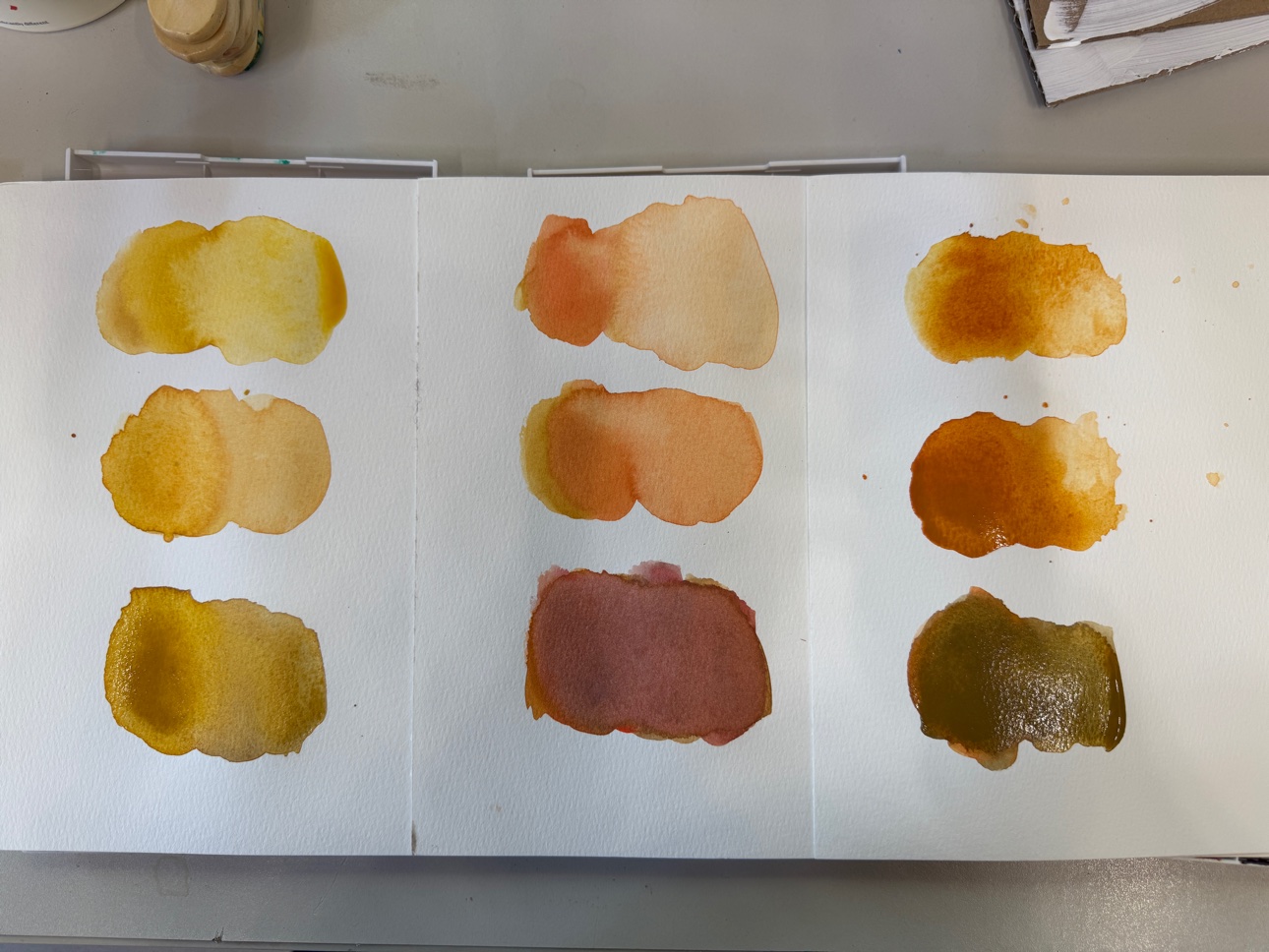
Paper does not only stay flat or ripple. It shapes the painting itself. Three basic effects are worth knowing, and all three show in one test wash.
Washes and drying
On a well sized cold press sheet, a wash goes down evenly and stays where it is placed. On hot press paper, the same wash moves longer and edges dry sharper. Rough paper breaks a wash into texture as pigment settles into the pits. Drying time changes too. Heavy and cotton papers dry more slowly, giving a longer working window.
Lifting color
Lifting means removing pigment with a clean damp brush, a tissue, or a sponge. Painters lift to recover lights, soften edges, and correct small areas. Paper decides how much lifting is possible. Strong sized and cotton papers usually allow cleaner lifting. Soft pulp papers stain sooner, and their surface can damage if scrubbed too hard.
Granulation
Granulation is the grainy texture some pigments form as they dry. Heavy pigment particles settle into the low places of the paper while the water dries. Textured paper shows it clearly. Smooth paper shows it far less. Some painters seek this effect for stone and weathered surfaces. It is a property to use on purpose.
One graded wash, one lifted stripe, and one granulating color on a new sheet will predict most of its behavior.
Choosing paper as a beginner
A beginner needs paper that makes learning possible, not paper that demands expert control. For most new painters, standard weight cold press paper is the sensible starting point. Its texture is forgiving, its weight handles ordinary washes, and it is sold everywhere.
From that starting point, change one thing at a time. Try a heavier sheet and notice how much flatter it stays. Try a smooth sheet and notice how edges behave. Each test teaches something specific, because only one variable changed. Many painters also keep two levels: affordable paper for daily studies, and better paper for paintings they plan to finish.
Storing paper flat and dry
Paper keeps responding to its surroundings after purchase. It absorbs moisture from damp air and gives it back in dry air. Poor storage can warp sheets, weaken sizing, and yellow the surface. The rules are simple.
- Store paper flat, not rolled or leaning, so sheets keep their shape and edges stay clean.
- Keep it dry and away from direct sunlight. Damp encourages mold. Strong light yellows paper over time.
- Keep it covered. A folder, a drawer, or the original packaging protects the surface from dust and handling marks.
A sheet with a slight wave from storage can often be flattened under weight before use. A spotted or musty sheet should be used for rough tests at most.
Paper choice and learning watercolor in a class
Reading about paper helps, but paper is learned by touch and by testing. Watching a wash behave on two different sheets, side by side, teaches faster than any description.
Art Be You is Bartosz Beda’s art academy in Richardson, Texas. It offers evening painting classes for adults, including an acrylic painting course and a watercolor painting course, taught by Bartosz Beda, an artist, painter and art teacher. Classes are small, limited to six seats. Materials are included in the classes, so beginners can start before buying supplies and learn what good paper feels like. Art Be You also offers workshops, private lessons, and gift cards. The art classes overview brings the courses together in one place.
Paper will never paint the picture for anyone. It will decide how much attention goes to fighting the surface and how much goes to the painting itself. Choose a sheet that suits the work and prepare it with care. For current dates, price, and availability, please check the class pages, including the watercolor painting course. You can also see more of Bartosz Beda’s own work on bartoszbeda.com and read about the academy on its academy page. Class work and studio news appear on our Instagram and Facebook.