Every beginner faces the same choice before a painting starts. Work from a scene in front of you, or work from a photograph of that scene. Both choices are legitimate, and painters at every level use both. But they are not the same experience, and they do not teach the same lessons.
A photograph feels safer. It stays still, and it waits while you mix paint. A real scene feels harder. It moves, it shifts, and it gives you more than you can use. The goal here is not to pick a winner. It is to understand what a camera changes, what your eyes give you that a camera cannot, and how to use both well.
Two different starting points
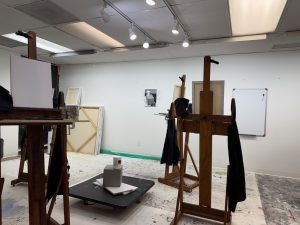
Painting from life means the subject is present while you work. It can be a landscape in front of you, a still life on a table, or a plant by a window. You look up, you look down at the painting, and you look up again. That looking is the work.
Painting from a photo means the subject was recorded earlier, usually by a camera or a phone. The scene may be gone, far away, or changed. What you have is an image of it, flat and fixed. Neither starting point guarantees a good painting. Still, each pushes you in a different direction, and it helps to know that direction first.
What a camera does to a scene
A camera does not see the way you see. It records through one lens, from one position, in one moment, and then processes what it recorded. Phones adjust brightness, color, and sharpness before you see the screen. By the time a photo reaches your easel, some information has been lost or changed.
- A camera flattens depth. A real scene has real space between near and far objects, and your eyes feel it. A photo presses that space flat, and distant objects can look stacked against near ones.
- A camera compresses values. Value means how light or dark something is. Your eyes handle a wide range at once. A camera narrows it, washing bright areas to white and closing dark areas to black.
- A camera darkens shadows. In life, shadows hold reflected light and visible detail. In a photo, they often become flat dark shapes with little inside them.
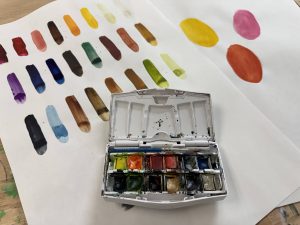
- A camera shifts color. Each camera and screen renders color its own way. A quiet color can turn loud, and a subtle one can disappear. Copying screen colors can mean painting the screen, not the scene.
- A camera freezes one viewpoint and one moment. You cannot lean sideways to see behind an object, or wait for better light. The photo gives one fixed answer.
- A camera crops without asking you. The edge of the photo is a decision already made. It may cut the subject weakly, and beginners often accept it without question.
None of this makes photos bad. It makes them edited. A photo is a report about a scene, and like any report it leaves things out.
What painting from life gives you
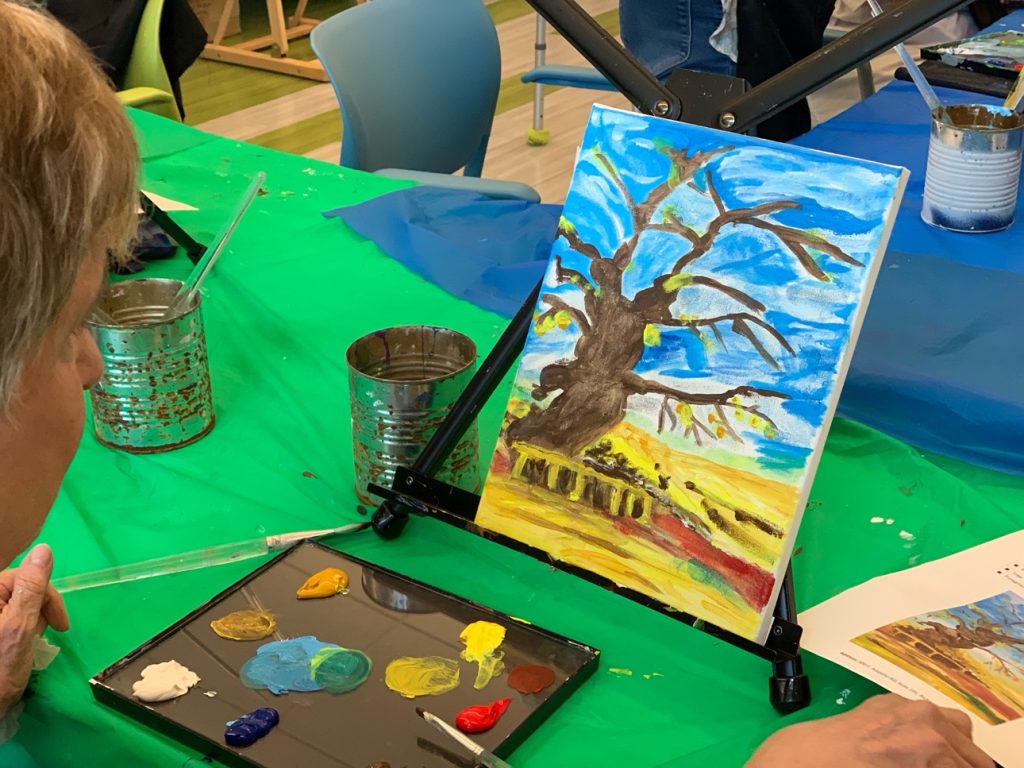
Working from life gives you the original scene, with all its information still present. That is its strength, and its difficulty. There is more to see than you can paint, so you are forced to choose. Choosing is where painting happens.
- You see with two eyes, and depth is real. You perceive space directly. You can tell what is in front and what is behind, and that air between objects is hard to invent from a photo.
- You see a fuller range of values. Your eyes adjust as you look. You see detail in bright areas, then in shadows a moment later. Shadows are rarely black, and bright areas are rarely pure white.
- The light changes, and that forces decisions. You cannot record everything, so you decide what matters most and commit to it. That pressure teaches speed and honesty.
- Edges appear as they exist in space. Some are sharp. Some dissolve into shadow or distance. You see where one form turns away and another passes behind it, and you learn by looking, not by outlining.
- You can move. A small step changes the view. You can look from a lower angle and check what sits behind an object. The subject stays a real thing, not a flat pattern.
- You remember differently. Time spent looking at a real subject stays with you, teaches things you were not looking for, and carries into later paintings.
Life also has limits. The subject may move. The light may fail. Weather can end a session. Life is the best training, but it is not always possible.
The honest advantages of a photo
Photos earn their place in painting. Used well, a photo is a useful tool, and there is no reason to feel guilty about using one.
- Photos hold subjects that move. Animals, crowds, traffic, and waves do not pose. A photo holds a moment life would never hold still for you.
- Photos reach subjects that are far away. You may visit a place once and paint it many times, returning to your photos long after you left.
- Photos are convenient. A photo waits. You can paint in bad weather or a short session, and the reference is unchanged when you return.
- Photos preserve detail. Architecture, machinery, and complex patterns are hard to record in a fast sketch. A photo keeps detail available while you work.
- Photos let you work after the fact. A scene that lasted minutes can become a painting that takes much longer. The photo bridges the gap.
- Photos help you plan. You can test crops and study values in black and white before paint is mixed.
These advantages are real. Trouble starts only when a painter treats the photo as the truth instead of a tool.
The traps of copying a photo
Most weak photo based paintings fail in the same few ways. The painter copies the image faithfully, and so copies every weakness the camera built into it.
- Copying camera errors. If the photo darkened the shadows, the painting gets dead shadows. If it flattened the space, the painting goes flat. If it distorted the subject, the distortion enters too.
- Every detail equally sharp. A camera gives a foreground leaf and a distant building similar clarity. Your eyes focus on one area while the rest softens. A painting sharp everywhere feels restless and unlooked at.
- Painting the photo instead of the subject. The painter stops seeing a tree or building as a real thing with weight and structure, and copies color patches from a small image instead. It can look accurate and still feel empty.
- Accepting the photo composition. Crop, viewpoint, and moment were chosen quickly, often by chance. Copying them without question lets chance design your painting.
- Chasing small detail too early. Zooming in invites endless detail. Beginners add it all before big shapes and values are settled, and the painting turns busy and weak.
The common thread is passivity. The photo makes the decisions, and the painter transfers them. Good painting from a photo uses the photo actively, with judgment.
How to use a photo well
A few working habits change everything. They take the photo off the throne and put it back on the workbench.
- Use your own photos when you can. You were there. You know what the light did and what the photo got wrong, and memory fills the gaps the camera left.
- Edit the crop before you paint. Move the edges and cut what does not help. A stronger crop is often the biggest improvement available, and it costs no paint.
- Simplify on purpose. Decide big shapes first, group small details into larger masses, and keep the little detail you use where you want the viewer to look.
- Print the photo. A print cannot be zoomed or brightened. Its colors are calmer than a screen, and it is easier to judge honestly.
- Treat the photo as a starting point. Move an object, remove a distraction, open a shadow the camera closed. The painting answers to itself, not to the photo.
- Check values in black and white. In grayscale you can see whether the light and dark pattern is strong enough to carry a painting, without color distracting you.
- Make a small study first. A quick small version tests composition and values. If it fails, a large version would only have failed slower, at greater cost.
Our earlier article on painting versus drawing covers a related choice, and the same principle applies. The medium and the source are tools. The seeing is yours.
A word about permission and copyright
One part of using photos is not about painting. It is about whose photo it is. The safe general rule is simple. Paint from your own photos, or from photos you have permission to use. A photograph belongs to the person who took it, in the same general way a painting belongs to the painter. If a painting is copied closely from someone else’s photograph, the rights in that image can be involved, and the painter can run into trouble for using work that was never theirs to use.
This is general information, not legal advice for a specific case. Rules vary, and exceptions exist. But the habit is easy. Take your own reference photos, and ask permission before using an image made by someone else. Your own photo also connects you to the subject, and that connection shows in the painting.
What each source teaches
Step back, and the two sources look like two different teachers. Painting from life teaches observation under pressure. It teaches values as they really are, space as it really feels, and edges as they really behave. It teaches you to decide, because the scene will not wait, and to trust your eyes over any device.
Painting from a photo teaches selection and control. It teaches calm planning, study over time, and building a painting in stages. It also teaches discipline, because you must supply everything the camera removed. Painters trained from life can do that. Painters who have only copied photos often cannot, because the knowledge was never built. Life builds the knowledge. Photos test whether you have it.
Exercises that combine both
These exercises are simple, and each joins the two sources so that each teaches the other.
- Same subject, both ways. Paint a subject from life, then again from a photo of the same setup. Compare them honestly. The differences show what the camera changed and what your eyes added.
- Photo first, life second. Paint a nearby view from a photo at home. Then go there and make a small painting on the spot. Notice what the photo missed, especially in shadows and distances.
- The three value photo study. Paint a photo using only three values, light, middle, and dark, with no detail allowed. This forces you to read structure instead of copying a surface.
- Life sketch, photo finish. Sketch quickly from life while the light is real, and take a photo before you leave. Later, use the photo only for factual details, and let the sketch carry values and space.
- Change one thing. Paint from a photo but deliberately move the main object, change the apparent time of day, or remove something large. Disobedience breaks the copying habit.
None of these exercises needs special equipment, only a subject, a camera or phone, and a willingness to compare results honestly.
A fair verdict for beginners
Here is the honest balance. Neither source is cheating, and neither is pure. Painting only from photos can leave your seeing undertrained, because the camera keeps doing the hardest part of the looking. Painting only from life can slow you down and shut you out of subjects you want to paint.
So use both, in the right order of respect. Treat life as the teacher and the photo as the assistant. When you can work from life, do it, even briefly, even badly. When a photo is the only way to reach a subject, use it actively, with the habits above. Over time your photos will improve, because you will take them like a painter, and your paintings from life will get calmer, because planning will have become a habit.
Learning both ways in a class
This balance is what a good class trains. In a class, you learn to look at a real subject, judge values and edges, and decide in paint while a teacher can correct your seeing in the moment. You also learn to plan, simplify, and judge a reference instead of obeying it. Those skills transfer to any photo you later paint from.
Art Be You is Bartosz Beda’s art academy in Richardson, Texas. It offers evening painting classes for adults, including an acrylic painting course and a watercolor painting course, taught by Bartosz Beda, an artist, painter and art teacher. Materials are included in the classes. Classes are small, limited to six seats. Art Be You also offers workshops, private lessons, and gift cards.
If you want to train your eyes, start with the art classes overview and check the class pages for current dates, price, and availability. You can see more of Bartosz Beda’s work at bartoszbeda.com and read about the teaching on the academy page. Class updates appear on the Art Be You Instagram and Facebook pages.